A Natural Solution for California's Herds: African Catfish Peptides

California's cattle producers and agricultural communities are all too familiar with the rising challenge of antibiotic resistance, making common bacterial infections harder to treat in livestock. But imagine a future where we could tackle these infections with a natural, powerful alternative. Our research points to just that: antimicrobial peptides (AMPs) found in African catfish.

We're really excited about these peptides because African catfish thrive in pathogen-rich freshwater, naturally producing these robust immune compounds in their skin mucus as a defense. This natural origin makes them highly appealing alternatives to synthetic drugs.

Predicted Safety and Potent Action

One of the most compelling aspects of these AMPs is their predicted safety for mammals. Our initial computer analyses suggest that various catfish AMPs are generally recognized as safe (GRAS). We predict they'll be absorbed in the human intestine without causing liver, brain, or heart toxicity. Furthermore, lab tests on a promising peptide, NACAP-II, confirmed it was non-hemolytic, meaning it didn't damage rabbit red blood cells—a strong indicator of its potential safety for mammalian cells.

Beyond safety, these peptides demonstrate effectiveness against problematic bacteria. One study revealed NACAP-II's strong activity against Extended-Spectrum Beta-Lactamase (ESBL)-producing Escherichia coli—a critical concern for both animal and human health due to its resistance to many common antibiotics. Another peptide, ACAP-IV, also showed antibacterial activity against E. coli and Staphylococcus aureus. We believe these AMPs work by directly disrupting bacterial cell membranes, a mechanism that makes it harder for bacteria to develop resistance compared to how they resist traditional antibiotics.
UC Master Gardener Program Statewide Blog: Article

Join us and give back this Giving Tuesday, Nov. 28!

November 22, 2023
By Melissa G Womack
The day that inspires acts of generosity is here again on Nov. 28 it's Giving Tuesday, and we hope you support the UC Master Gardener Program in its 8th year of participating! Giving Tuesday is a global movement that takes place every year on the Tuesday after Thanksgiving.
View Article
Primary Image
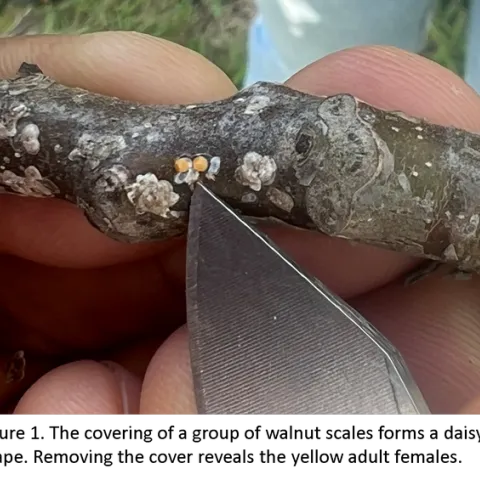
Figure 1. The covering of a group of walnut scales forms a daisy shape. Removing the cover reveals the yellow adult females
Nut, Olive and Prune Programmatic News: Article

Treatment Options for Management of Walnut Scale and Frosted Scale

November 22, 2023
By Elizabeth J Fichtner
Walnut scale (Figure 1) is an important economic pest of walnuts in California. High populations of walnut scale may affect tree vigor as well as predispose trees to diseases caused by several plant pathogenic fungi and possibly flatheaded borer damage.
View Article
Santa Cruz County: Article

Rabbit Show & 4-H Rabbit Project

November 22, 2023
Hello all! If you are interested in being in the Rabbit Project, learning more about rabbits, learning what a rabbit show is all about or just looking at several hundred cute rabbits...
View Article
Primary Image
20231122 104340
Kearney news updates: Article

Field Crops, Alfalfa and Forage Field Day Hosted at Kearney

November 22, 2023
By Ryan D Puckett
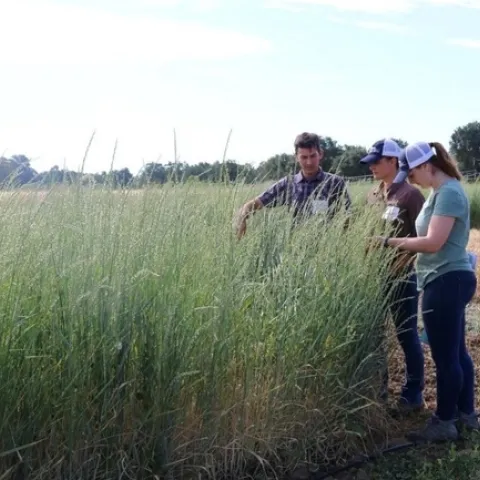
This field day was held on September 29, 2023, at the Kearney Ag Research and Extension Center in Parlier, CA. We had good attendance and vibrant participation from everybody present. Many of the attendees provided feedback upon our request by completing a survey.
View Article
Primary Image
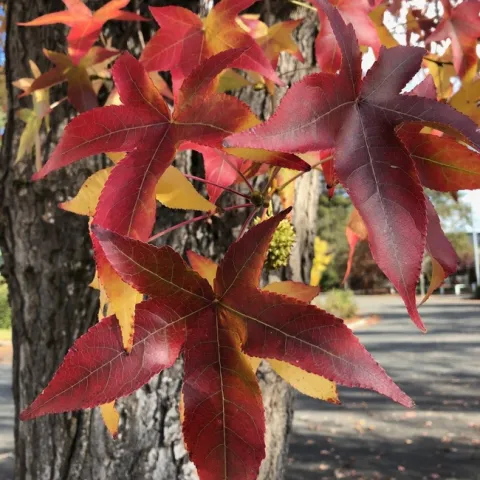
Close up of pointed leaves showing fall color.
The Stanislaus Sprout: Article

Plant a Tree Now for Fall Color Next Year!

November 22, 2023
By Anne E Schellman, Roger A Duncan
The colors of autumn are especially beautiful this year. Tree leaves are turning brilliant shades of yellow, orange, and even purple. Read about the trees you've noticed around town that are currently popping with color.
View Article