A Natural Solution for California's Herds: African Catfish Peptides

California's cattle producers and agricultural communities are all too familiar with the rising challenge of antibiotic resistance, making common bacterial infections harder to treat in livestock. But imagine a future where we could tackle these infections with a natural, powerful alternative. Our research points to just that: antimicrobial peptides (AMPs) found in African catfish.

We're really excited about these peptides because African catfish thrive in pathogen-rich freshwater, naturally producing these robust immune compounds in their skin mucus as a defense. This natural origin makes them highly appealing alternatives to synthetic drugs.

Predicted Safety and Potent Action

One of the most compelling aspects of these AMPs is their predicted safety for mammals. Our initial computer analyses suggest that various catfish AMPs are generally recognized as safe (GRAS). We predict they'll be absorbed in the human intestine without causing liver, brain, or heart toxicity. Furthermore, lab tests on a promising peptide, NACAP-II, confirmed it was non-hemolytic, meaning it didn't damage rabbit red blood cells—a strong indicator of its potential safety for mammalian cells.

Beyond safety, these peptides demonstrate effectiveness against problematic bacteria. One study revealed NACAP-II's strong activity against Extended-Spectrum Beta-Lactamase (ESBL)-producing Escherichia coli—a critical concern for both animal and human health due to its resistance to many common antibiotics. Another peptide, ACAP-IV, also showed antibacterial activity against E. coli and Staphylococcus aureus. We believe these AMPs work by directly disrupting bacterial cell membranes, a mechanism that makes it harder for bacteria to develop resistance compared to how they resist traditional antibiotics.
Primary Image
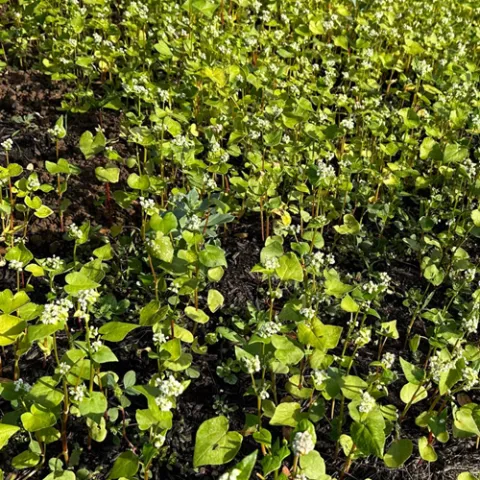
Caption: Buckwheat is a non-legume cover crop that helps to improve the soil in preparation for spring planting.
UC Marin Master Gardeners: Article

December 2023: Caring for the Soil

November 28, 2023
After the fall harvest was over, it was time to clean up and replenish the soil in the Edible Demo Garden. Healthy soil is fundamental to the success of the next seasons crops.
View Article
Primary Image
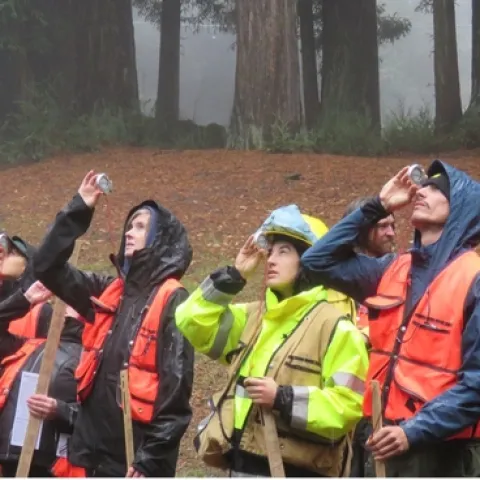
Eight people in raincoats and orange or yellow vests peer through a handheld device up at trees.
ANR Employee News: Article

Forest Stewardship team updates their Story Map

November 28, 2023
By Pamela S Kan-Rice
Through a brand-new application design, the Forest Stewardship team has made it easier to view forestry community stories The Forest Stewardship team has revamped their Forest Stewardship Story Map, first published in summer 2023.
View Article
UCCE in Santa Barbara County: Article

HAPPY GIVING TUESDAY!

November 28, 2023
Today, people around the world will come together to celebrate generosity and make an impact. Remember, every gift counts. Follow us on Facebook, Twitter and Instagram for updates.
View Article
Primary Image
African violets reliably bloom several times a year. (Photo: Wikimedia Commons)
Fresno Gardening Green: Article

Learn to propagate beautiful, low-maintenance African violets

November 28, 2023
In my opinion, you can never have too many African violets! Lush green leaves with beautiful flowers - they just bring joy. And I have learned that they are easy to propagate - if you are patient. African violets like filtered sun (north facing windows are best). They need sun to promote flowering.
View Article
Primary Image
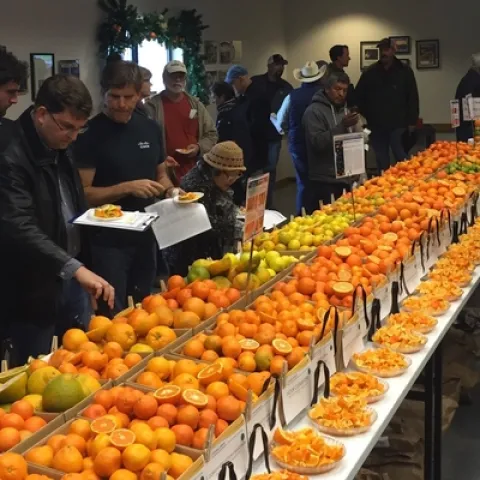
People holding paper plates and lists of citrus varieties mill around a long table filled with boxes of assorted citrus varieties.
ANR Employee News: Article

Lindcove REC displays citrus fruit for tasting Dec. 9

November 28, 2023
By Pamela S Kan-Rice
Lindcove Research and Extension Center invites the public to their citrus fruit display and tasting. On Dec. 9, from 9 a.m. to noon, they will be hosting their annual free event where visitors can taste and see more than 100 citrus varieties grown at the center.
View Article
Primary Image
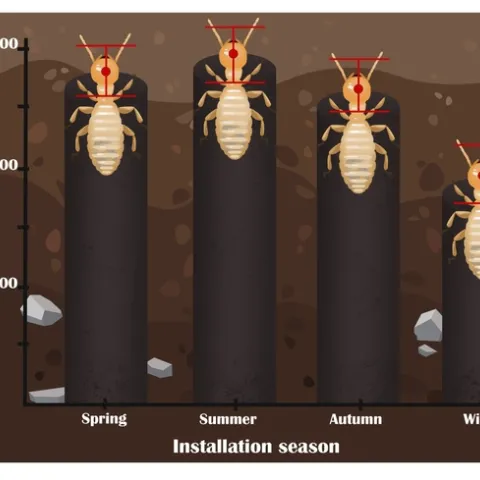
Figure 4. Time required for western subterranean termites to begin consuming baits installed during four different seasons in California’s San Francisco Bay Area. Red points on termite heads represent the average time-to-attack (number of days between installation and first observation of bait consumption). Red bars extending above and below each point represent standard error of the mean. Photo by Casey Hubble, UCCE.
Pests in the Urban Landscape: Article

Termite Bait Study

November 28, 2023
By Andrew M Sutherland
Subterranean termites (Family Rhinotermitidae) are considered the most serious wood-destroying pests in the world, causing an estimated $32 billion in global economic impact each year. California is home to both native and introduced subterranean termite species (Figure 1).
View Article
Primary Image
QLFF fly quarantine area

When Quarantined, What Do Growers Do?

November 28, 2023
By Ben A Faber
Queensland fruit fly quarantine? Growers should consider the pre-quarantine program. The Queensland fruit fly quarantine zone has been expanded (see: https://www.cdfa.ca.gov/plant/qff/regulation.html).
View Article