A Natural Solution for California's Herds: African Catfish Peptides

California's cattle producers and agricultural communities are all too familiar with the rising challenge of antibiotic resistance, making common bacterial infections harder to treat in livestock. But imagine a future where we could tackle these infections with a natural, powerful alternative. Our research points to just that: antimicrobial peptides (AMPs) found in African catfish.

We're really excited about these peptides because African catfish thrive in pathogen-rich freshwater, naturally producing these robust immune compounds in their skin mucus as a defense. This natural origin makes them highly appealing alternatives to synthetic drugs.

Predicted Safety and Potent Action

One of the most compelling aspects of these AMPs is their predicted safety for mammals. Our initial computer analyses suggest that various catfish AMPs are generally recognized as safe (GRAS). We predict they'll be absorbed in the human intestine without causing liver, brain, or heart toxicity. Furthermore, lab tests on a promising peptide, NACAP-II, confirmed it was non-hemolytic, meaning it didn't damage rabbit red blood cells—a strong indicator of its potential safety for mammalian cells.

Beyond safety, these peptides demonstrate effectiveness against problematic bacteria. One study revealed NACAP-II's strong activity against Extended-Spectrum Beta-Lactamase (ESBL)-producing Escherichia coli—a critical concern for both animal and human health due to its resistance to many common antibiotics. Another peptide, ACAP-IV, also showed antibacterial activity against E. coli and Staphylococcus aureus. We believe these AMPs work by directly disrupting bacterial cell membranes, a mechanism that makes it harder for bacteria to develop resistance compared to how they resist traditional antibiotics.
Primary Image
20181120 CA text
Ranching in the Sierra Foothills: Article

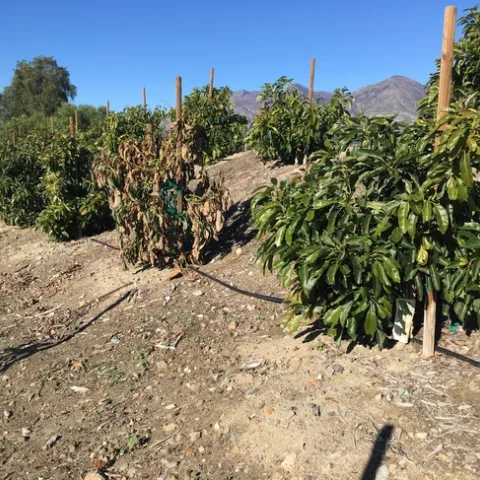
Tools for Reporting Drought Conditions

November 21, 2018
By Daniel K Macon
As I write this post, the first few drops of rain are falling on our part of the Sierra foothills since early October. Here in Auburn, those early autumn rains were enough to green up our annual rangeland; other parts of the foothills and Sacramento Valley weren't so fortunate.
View Article
Primary Image
Jen Being a Naturalist Means
California Naturalist: Article

Gratitude for our California Naturalist community

November 21, 2018
We asked California Naturalists what it means to be a Naturalist. To Jen, being a Naturalist means lifelong learning, appreciating and loving, and sharing that love and appreciation with others. Sharing comes in many forms.
View Article
Primary Image
CropSafetyWebsite Banner
UCCE Sonoma: Article

Produce Safety and Smoke

November 21, 2018
Local food producers: The recent wildfires are creating dangerous air pollution in our region. The biggest threat to your health is from inhaling the smoke. Protect your lungs by staying indoors whenever possible, and wearing a respirator mask when outdoors.
View Article
Primary Image
A syrphid fly, tucked in the folds of a rock purslane, Calandrinia grandiflora, sips nectar. (Photo by Kathy Keatley Garvey)
Bug Squad: Article

Syrphid Fly in Rock Purslane: When a House Is a Home

November 21, 2018
By Kathy Keatley Garvey
When a house is a home... Take the case of a syrphid fly, aka hover fly or flower fly. It's a cold and windy day, and it's tucked in the folds of a rock purslane, Calandrinia grandiflora, in Vacaville, Calif.
View Article
Primary Image
photos by Erin Mahaney
Under the Solano Sun: Article

Growing and Roasting Sunflower Seeds

November 21, 2018
ave you ever been in the middle of a garden project and suddenly wondered how you got there? I pondered this question as I began what felt like my 10th hour of separating sunflower seeds from the chaff.
View Article
Primary Image
The Bohart Museum of Entomology is featuring a memorial exhibit showcasing a biological control pioneer, George Compere (1858-1928).
Bug Squad: Article

A Glimpse of George Compere, a Pioneer in Biological Control

November 20, 2018
By Kathy Keatley Garvey
"George Compere." Non-entomologists may not recall his name, but entomologists--especially those who study biological control--definitely do. And whether you do or don't, you'll want to see the display featuring George Compere (1858-1928), at the Bohart Museum of Entomology, UC Davis.
View Article
Primary Image
Thanksgiving Turkey
UC Master Gardeners- Diggin' it in SLO: Article

Thanksgiving Safety

November 20, 2018
Thanksgiving Safety By Diane Galvan UCCE Master Food Preserver It's my turn to orchestrate our Thanksgiving meal. One holiday we all got ill' from something we ate! Any tips for making sure that this doesn't happen on my watch? Olivia, Los Osos Follow these guidelines for a safe family feast.
View Article