A Natural Solution for California's Herds: African Catfish Peptides

California's cattle producers and agricultural communities are all too familiar with the rising challenge of antibiotic resistance, making common bacterial infections harder to treat in livestock. But imagine a future where we could tackle these infections with a natural, powerful alternative. Our research points to just that: antimicrobial peptides (AMPs) found in African catfish.

We're really excited about these peptides because African catfish thrive in pathogen-rich freshwater, naturally producing these robust immune compounds in their skin mucus as a defense. This natural origin makes them highly appealing alternatives to synthetic drugs.

Predicted Safety and Potent Action

One of the most compelling aspects of these AMPs is their predicted safety for mammals. Our initial computer analyses suggest that various catfish AMPs are generally recognized as safe (GRAS). We predict they'll be absorbed in the human intestine without causing liver, brain, or heart toxicity. Furthermore, lab tests on a promising peptide, NACAP-II, confirmed it was non-hemolytic, meaning it didn't damage rabbit red blood cells—a strong indicator of its potential safety for mammalian cells.

Beyond safety, these peptides demonstrate effectiveness against problematic bacteria. One study revealed NACAP-II's strong activity against Extended-Spectrum Beta-Lactamase (ESBL)-producing Escherichia coli—a critical concern for both animal and human health due to its resistance to many common antibiotics. Another peptide, ACAP-IV, also showed antibacterial activity against E. coli and Staphylococcus aureus. We believe these AMPs work by directly disrupting bacterial cell membranes, a mechanism that makes it harder for bacteria to develop resistance compared to how they resist traditional antibiotics.
Primary Image
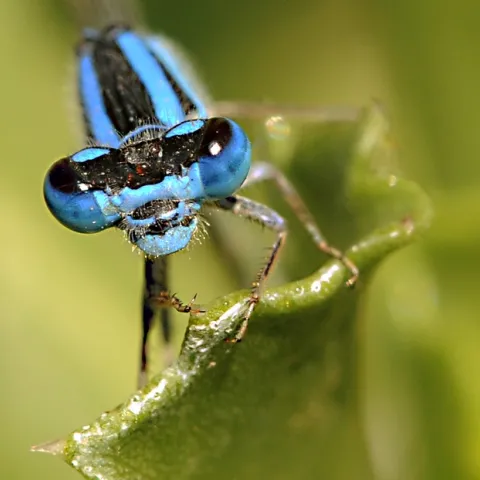
Damselfly's compound eyes don't miss much. (Photo by Kathy Keatley Garvey)
Bug Squad: Article

Blue Dancers

July 19, 2011
By Kathy Keatley Garvey
Blue damselflies should be on "Dancing with Stars." Because, in many respects, they ARE the stars--the stars of the insect world. They're slender, delicate and beautiful dancers that look like blue-stick diamonds.
View Article
Primary Image
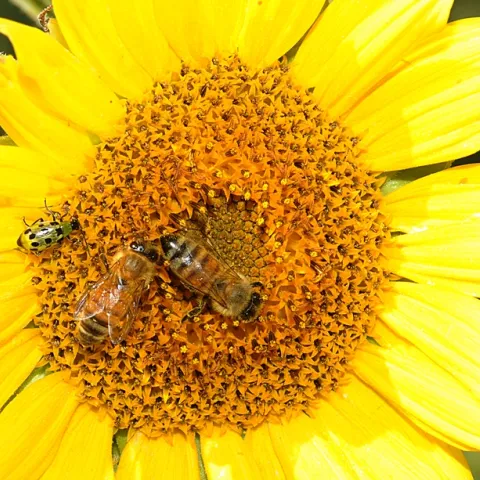
Spotted cucumber beetle sharing a sunflower with two honey bees. (Photo by Kathy Keatley Garvey)
Bug Squad: Article

Two's Company, Three's a Crowd

July 18, 2011
By Kathy Keatley Garvey
Two's company, three's a crowd? Yes, when a spotted cucumber beetle tries to share a sunflower with two honey bees. That was the scene Sunday in a sunflower field along Pedrick Road, Dixon, Solano County. The spotted cucumber beetle is a pest. Honey bees are beneficial.
View Article

Making Pesticide Safety Visible

July 17, 2011
By Amanda Crump
The adage "a picture is worth a thousand words" can apply to pesticide safety, too! When I was at Colorado State University in 2006, Sandra McDonald of Mountain West PEST led an effort to teach pesticide safety through the use of photos.
View Article
Primary Image
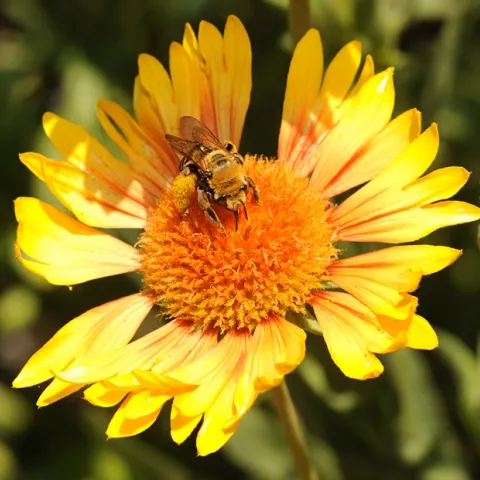
Sunflower bee, Svastra obliqua expurgata, on Gaillardia. (Photo by Kathy Keatley Garvey)
Bug Squad: Article

Putting the 'Sun' in Sunflower

July 15, 2011
By Kathy Keatley Garvey
It's often mistaken for the honey bee. But it's not a honey bee (Apis mellifera). It's a different species of bee. Specifically, it's a long-horn sunflower bee. We spotted this sunflower bee July 11 in the Hagen-Dazs Honey Bee Haven at the Harry H. Laidlaw Jr.
View Article
Primary Image
Queen bee, at the peak of her season, can lay about 2000 eggs a day. (Photo by Kathy Keatley Garvey)
Bug Squad: Article

Honey Bee Royalty at State Fair

July 14, 2011
By Kathy Keatley Garvey
It's good to see that American Honey Bee Queen Teresa Bryson, 19, of Chambersburg, Pa., will be spreading the word about beekeeping and honey at the California State Fair, 1600 Exposition Blvd. Sacramento. The fair opened July 14 and continues through July 31.
View Article
Primary Image
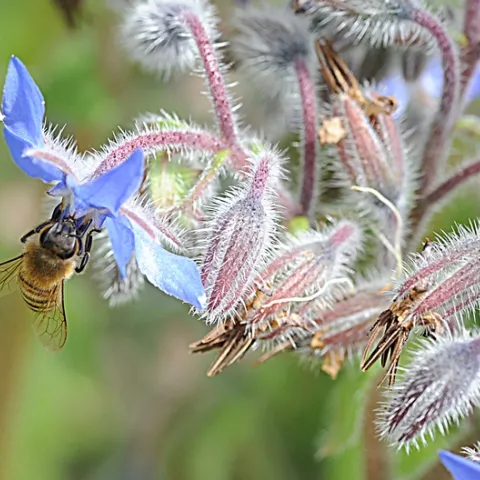
Honey bee foraging on borage. (Photo by Kathy Keatley Garvey)
Bug Squad: Article

Borage! Borage! Borage!

July 13, 2011
By Kathy Keatley Garvey
A recent trip to the Mendocino Coast Botanical Gardens, Fort Bragg, yielded spectacular views of the ocean, but something else also proved spectacular--the honey bees and bumble bees foraging on borage.
View Article

Field School: Ecologically-Based Invasive Plant Management

July 12, 2011
By Brad Hanson
Reposting of an announcement for a Field School sponsored by the Western Society of Weed Science. This is not a UC Field School but may be of broad interest to western landmanagers fighting invasive weeds. The informational flyer can be found here: http://sfc.smallfarmcentral.
View Article
Primary Image
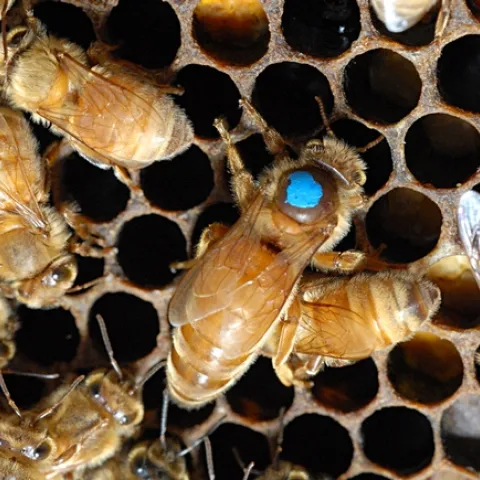
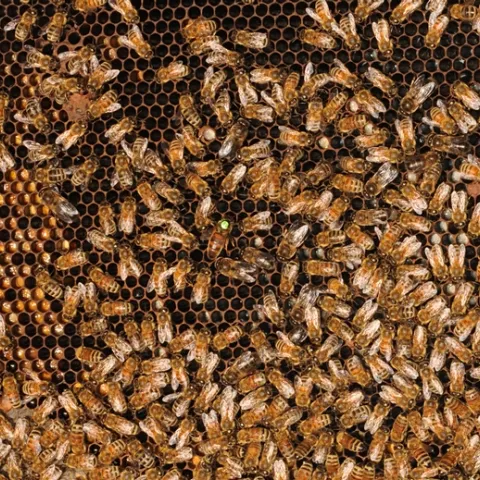
Inside the hive--every bee has a job to do. (Photo by Kathy Keatley Garvey)

Bee-ing There for the Bee-a-Thon

July 12, 2011
By Kathy Keatley Garvey
There are marathons, read-a-thons, dance-a-thons, quilt-a-thons, paint-a-thons, geek-a-thons and sleep-a-thons. So why not a bee-a-thon? YourGardenShow.com is teaming with The Great Sunflower Project to sponsor a worldwide bee-a-thon, a free online town-hall event to be broadcast from 9 a.m. to 9 p.
View Article
Primary Image
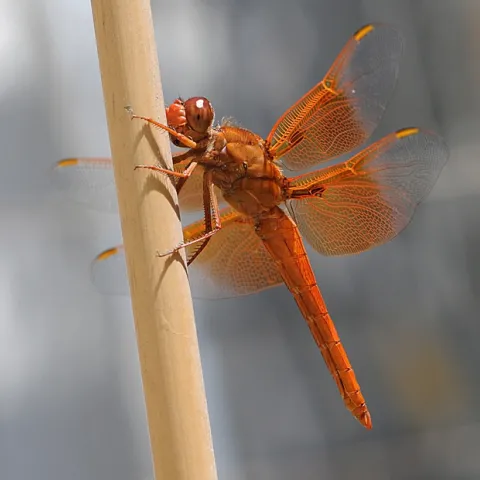
Flame skimmer (Libellula saturata) rests on a tomato stake after hunting prey over a fish pond. (Photo by Kathy Keatley Garvey)
Bug Squad: Article

A Firecracker of a Dragonfly

July 11, 2011
By Kathy Keatley Garvey
You can't miss the flame skimmer dragonfly (Libellula saturata). You especially can't miss the male, which is firecracker red. We watched a male flame skimmer hunt for prey over our fish pond Saturday afternoon.
View Article

I Kill Weeds

July 11, 2011
By Chris J McDonald
I kill weeds, I must admit. I was talking to my daughter about writing a weed blog for UC Cooperative Extension and asked her what I should say I do (kindergarteners have the best ideas). She replied, bluntly, you kill weeds, daddy.
View Article