A Natural Solution for California's Herds: African Catfish Peptides

California's cattle producers and agricultural communities are all too familiar with the rising challenge of antibiotic resistance, making common bacterial infections harder to treat in livestock. But imagine a future where we could tackle these infections with a natural, powerful alternative. Our research points to just that: antimicrobial peptides (AMPs) found in African catfish.

We're really excited about these peptides because African catfish thrive in pathogen-rich freshwater, naturally producing these robust immune compounds in their skin mucus as a defense. This natural origin makes them highly appealing alternatives to synthetic drugs.

Predicted Safety and Potent Action

One of the most compelling aspects of these AMPs is their predicted safety for mammals. Our initial computer analyses suggest that various catfish AMPs are generally recognized as safe (GRAS). We predict they'll be absorbed in the human intestine without causing liver, brain, or heart toxicity. Furthermore, lab tests on a promising peptide, NACAP-II, confirmed it was non-hemolytic, meaning it didn't damage rabbit red blood cells—a strong indicator of its potential safety for mammalian cells.

Beyond safety, these peptides demonstrate effectiveness against problematic bacteria. One study revealed NACAP-II's strong activity against Extended-Spectrum Beta-Lactamase (ESBL)-producing Escherichia coli—a critical concern for both animal and human health due to its resistance to many common antibiotics. Another peptide, ACAP-IV, also showed antibacterial activity against E. coli and Staphylococcus aureus. We believe these AMPs work by directly disrupting bacterial cell membranes, a mechanism that makes it harder for bacteria to develop resistance compared to how they resist traditional antibiotics.
Primary Image
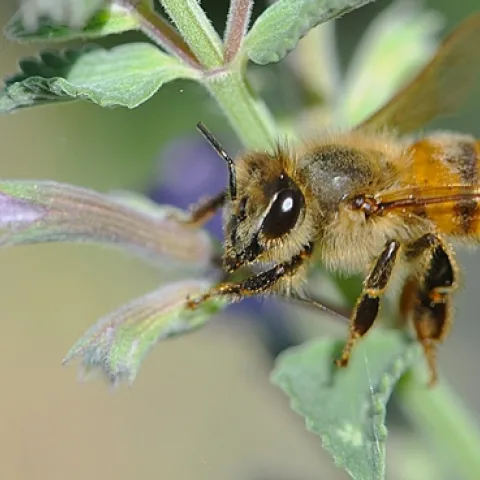
Sand wasp on red flowering thyme. (Photo by Kathy Keatley Garvey)
Bug Squad: Article

'The Little White Bees'

June 29, 2011
If it looks like a bee, sips nectar like a bee, and buzzes away like a bee, that doesn't mean it's a bee. Last weekend we visited a Fort Bragg nursery specializing in succulents, and these "little white bees" were all over the red flowering thyme (Thymus serphyllum). "Little white bees.
View Article
Colusa County: Article

June 2011

June 29, 2011
Salinity in rice fields - Difficult start for 2011.
View Article
Primary Image
Male bumble bee (Bombus flavifrons) nectaring perennial cornflower (Centaurea montana). (Photo by Kathy Keatley Garvey)
Bug Squad: Article

A Bumble Bee to Remember

June 28, 2011
Not all bumble bees are primarily black. Take the Bombus flavifrons. We spotted a male Bombus flavifrons nectaring on Centaurea montana, aka perennial cornflower or mountain cornflower, recently in Mill Valley.
View Article
UC Weed Science (weed control, management, ecology, and minutia): Article

What homeowners can learn from farmers about weed control (WSSA article)

June 27, 2011
By Brad Hanson
After an extended cool and wet spring, we are finally getting summer-like weather in most of the Central Valley. If your garden and home landscape are like mine, now is the time of the year where the winter weeds are winding down and the summer weeds are coming in to take their places.
View Article
Primary Image
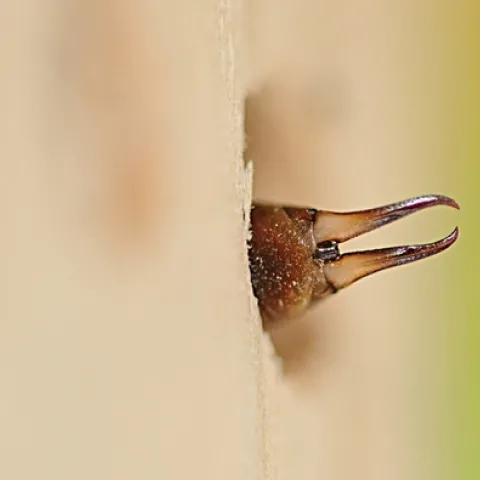
Tell-tale sign of an earwig. (Photo by Kathy Keatley Garvey)
Bug Squad: Article

Forceps, Please

June 27, 2011
Forceps, please! Have you ever stopped to admire a blossom and seen forceps protruding? Earwig! We were walking near Mrak Hall, UC Davis, on a hot summery afternoon and spotted a tell-tale sign: abdominal forceps, aka pinchers or pincers. Earwig! We unfolded the blossom and an earwig crawled out.
View Article
Primary Image
Honey bee with a load of propolis which her sisters later unloaded. (Photo by Kathy Keatley Garvey)
Bug Squad: Article

It's the Glue that Holds It Together

June 24, 2011
Honey bee foragers collect nectar, pollen, water and propolis. Propolis? What's propolis? It's that sticky plant resin or "goo" that the bees use to seal small spaces in the hive. It's also known as "bee glue.
View Article
Primary Image
Soapberry bug on the UC Davis campus. (Photo by Kathy Keatley Garvey)
Bug Squad: Article

Natives vs. Non-Natives

June 23, 2011
Quick! When you think of non-native species, what's your first reaction? That they're Public Enemy No.
View Article
Primary Image
Female wool carder bee (Anthidium manicatum) heads for lupine at the Harry H. Laidlaw Jr. Honey Bee Research Facility at UC Davis. (Photo by Kathy Keatley Garvey)
Bug Squad: Article

Have You Hugged Your Pollinator Today?

June 22, 2011
Have you hugged your favorite pollinator today? It's National Pollinator Week, and you're allowed to do that this week. Actually, any time you feel the inclination. Honey bees, bumble bees, wool carder bees, leafcutter bees, sweat bees--they're all out there, ready for a hug.
View Article