A Natural Solution for California's Herds: African Catfish Peptides

California's cattle producers and agricultural communities are all too familiar with the rising challenge of antibiotic resistance, making common bacterial infections harder to treat in livestock. But imagine a future where we could tackle these infections with a natural, powerful alternative. Our research points to just that: antimicrobial peptides (AMPs) found in African catfish.

We're really excited about these peptides because African catfish thrive in pathogen-rich freshwater, naturally producing these robust immune compounds in their skin mucus as a defense. This natural origin makes them highly appealing alternatives to synthetic drugs.

Predicted Safety and Potent Action

One of the most compelling aspects of these AMPs is their predicted safety for mammals. Our initial computer analyses suggest that various catfish AMPs are generally recognized as safe (GRAS). We predict they'll be absorbed in the human intestine without causing liver, brain, or heart toxicity. Furthermore, lab tests on a promising peptide, NACAP-II, confirmed it was non-hemolytic, meaning it didn't damage rabbit red blood cells—a strong indicator of its potential safety for mammalian cells.

Beyond safety, these peptides demonstrate effectiveness against problematic bacteria. One study revealed NACAP-II's strong activity against Extended-Spectrum Beta-Lactamase (ESBL)-producing Escherichia coli—a critical concern for both animal and human health due to its resistance to many common antibiotics. Another peptide, ACAP-IV, also showed antibacterial activity against E. coli and Staphylococcus aureus. We believe these AMPs work by directly disrupting bacterial cell membranes, a mechanism that makes it harder for bacteria to develop resistance compared to how they resist traditional antibiotics.

UC Master Food Preservers of Central Sierra: Event

Central Sierra: Everything Herbs (in person - Jackson)

Event Date
May 17, 2025

Culinary herbs are an easy way to add healthy flavor and great taste to your cooking. Growing your own herbs keeps food costs lower as well as adding attractive, fragrant, and tasty plants to your landscape. A joint Master Gardener/Master Food Preserver class will discuss easy annual and perennial herbs to…
UC Master Food Preservers of Central Sierra
View Event
Primary Image
Farmer placing agricultural cuttings on a pile with chickens watching
Organic Materials Management: Article

Chicken-Powered Composting: Nature's Efficient Recyclers at Work

April 1, 2025
By Michael Cohen
Would you like some help with composting but are short on labor? Let your chickens do the work! At Garden to Table Silicon Valley Community Farm in San Jose they create a mound, or “Chicken Mountain”, of agricultural scraps and sprouted seeds for the flock, where the chickens eagerly peck and…
View Article
Primary Image
wildflowers
UC Master Gardener Program Statewide Blog: Article

Gardeners with Heart: Hands in the Dirt, Hearts in the Community

April 1, 2025
By Melissa G Womack
 In neighborhoods big and small, from a high-rise senior housing in San Francisco to demonstration gardens in the high desert. Yes, the gardens are beautiful. But the real growth? That’s happening between the people. UC Master Gardeners have built bridges between people and places, forged new…
View Article
Primary Image
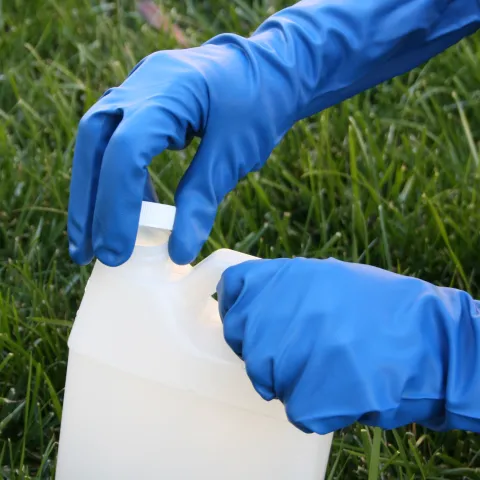
A person wearing blue gloves on their hands is unscrewing the cap to a white container
Pests in the Urban Landscape: Article

What Should You Wear When Using Pesticides?

April 1, 2025
By Lauren Fordyce
When using pesticides and other garden chemicals, you should always wear personal protective equipment (PPE) to keep yourself safe. Pesticides can enter the body via the eyes, skin, nose, or mouth. The skin is the most common way pesticides enter our bodies, usually by splashing, spillage, or spray drift…
View Article
Stanislaus County: Event

Advances in Vineyard Water & Nutrient Management Workshop

Event Date
Apr 29, 2025

The workshop will feature presentations by various experts and researchers focusing on best irrigation and nutrient management practices of vineyards in the San Joaquin Valley. Attendees will gain insights into the irrigation and nutrient needs of vineyards. This knowledge aims to ensure healthier vine…
Stanislaus County
View Event
UC Master Food Preserver: Event

Funky Tea: Kombucha (online)

Event Date
Apr 17, 2025

Join us to learn about how to make kombucha, a refreshing drink made from fermenting tea. We’ll teach you how to maintain a healthy SCOBY (a symbiotic culture of bacteria and yeast) to make kombucha, and how to do a second fermentation flavored with various fruits.
UC Master Food Preserver
View Event
ANR Employee News: Article

Celebration Corner

March 31, 2025
By Pamela S Kan-Rice
Awards and other highlights of employees to celebrate. Eskalen honored by American Phytopathological Society Pacific Division. Choe, Murillo, Wilson win regional entomology awards. Newton honored with 2025 Common Threads Award. UC discusses role of universities in research. Playground stencils pique…
View Article
Primary Image
Creeping Sage flowering, Jeanette Alosi.
The Real Dirt: Article

Spring Blooming Natives

March 31, 2025
By Jeanette Alosi
Spring is here, and many native plants are coming into bloom. Orange California poppies color the roadside and hills. Redbuds burst with magenta flowers. Butterflies flutter among the blue dicks in grassy areas in upper Bidwell Park and along foothill roadsides. The good news is that many California native…
View Article
ANR Employee News: Article

Sierra Foothill REC seeks research proposals

March 31, 2025
By Michele Flavell
 The UC Sierra Foothill Research and Extension Center is soliciting proposals from April 1 – May 16, 2025, to support new and continuing research on rangeland and oak woodland ecology and management, beef cattle health, production and management, as well as related agricultural and natural resource…
View Article