

The garage can be one of the most vulnerable parts of the house. Generally, garages are not well sealed since they are not heated or cooled. Additionally, garages often have multiple vents, especially if they are equipped with water heaters or laundry appliances. As most household flammable materials are stored in the garage, embers entering through door gaps or vents are extremely dangerous. Moreover, garage doors may have windows in the top sections that can easily be broken by heat or flying debris (although the glass in newer doors are usually tempered). Any type of garage without doors, such as an attached carport, is an even greater concern. Typically, garages of this type have a large amount of combustibles and plenty of nooks and crannies for embers to lodge.

Diagram illustrating the areas on a garage most vulnerable to wildfire.
Garage Type or Component | Description and Vulnerabilities | Recommendations |
Garage Door with Bottom Gap 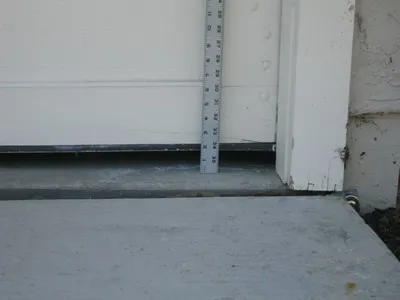 |
|
|
Garage Door with Top Gap 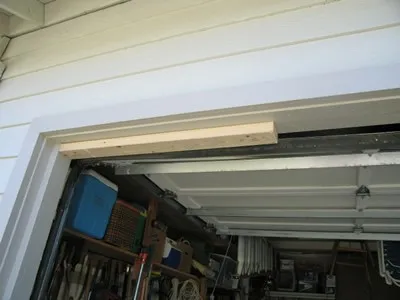 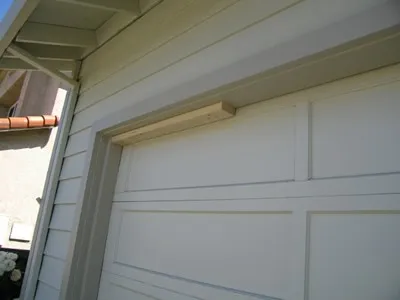 |
|
|
Garage Door with Glass  |
|
|
Garage Door with Vents 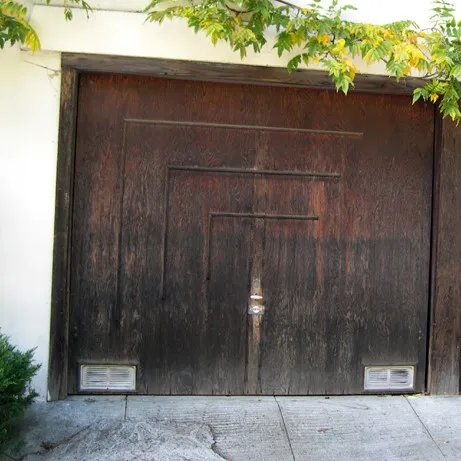 |
|
|
Garage Space Without Door  |
|
|
Entry Door with Tempered Glass Window 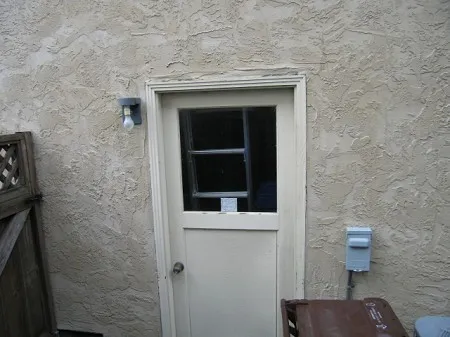 |
|
|
Steel-Clad Entry Door 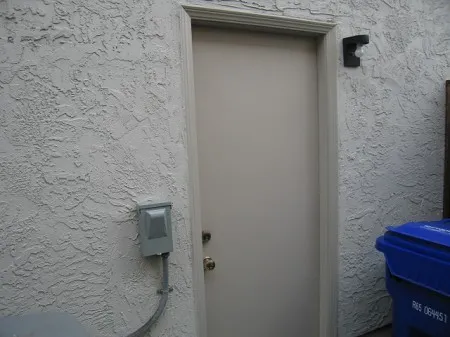 |
|
|
How Can You Protect Your Garage?
- Fill or plug any holes or gaps on or around your garage door: gaps can serve as entry points for embers. Filling or plugging these gaps will improve your garage door's ability to resist wildfires.
- Install weather stripping at the top and bottom of your garage to help seal up gaps. For roll-up doors, adjust your roll-up mechanism after installation to ensure a proper seal. Similar solutions can apply to tilt-type doors.
- Replace glass elements with fire-rated glass: glass panels on garage doors or single pane windows on entry doors should be replaced with fire-rated solutions or filled in with panels.
- Remove combustible materials from carports: minimize combustible materials within attached carports.
Open carports can pose a serious threat to your home during wildfires. Consider installing a proper garage enclosure to reduce risk.
California Regulations
Garage doors are covered under Chapter 7A. Since they are considered exterior doors, they must comply with the exterior door provisions. According to Chapter 7A of the California Building Code, garage doors should:
- Being made of non-combustible or ignition resistant material.
- Having a 20-minute fire resistance rating.
- Comply via SFM 12-7A-1 for walls.
- Comply prescriptively by being constructed of solid wood meeting minimum thickness requirements for stiles and rails [1-3/8 inches] and field panels [1-1/4 inches].
Products and assemblies that have complied with Chapter 7A can be found in the WUI Product Handbook.