A Natural Solution for California's Herds: African Catfish Peptides

California's cattle producers and agricultural communities are all too familiar with the rising challenge of antibiotic resistance, making common bacterial infections harder to treat in livestock. But imagine a future where we could tackle these infections with a natural, powerful alternative. Our research points to just that: antimicrobial peptides (AMPs) found in African catfish.

We're really excited about these peptides because African catfish thrive in pathogen-rich freshwater, naturally producing these robust immune compounds in their skin mucus as a defense. This natural origin makes them highly appealing alternatives to synthetic drugs.

Predicted Safety and Potent Action

One of the most compelling aspects of these AMPs is their predicted safety for mammals. Our initial computer analyses suggest that various catfish AMPs are generally recognized as safe (GRAS). We predict they'll be absorbed in the human intestine without causing liver, brain, or heart toxicity. Furthermore, lab tests on a promising peptide, NACAP-II, confirmed it was non-hemolytic, meaning it didn't damage rabbit red blood cells—a strong indicator of its potential safety for mammalian cells.

Beyond safety, these peptides demonstrate effectiveness against problematic bacteria. One study revealed NACAP-II's strong activity against Extended-Spectrum Beta-Lactamase (ESBL)-producing Escherichia coli—a critical concern for both animal and human health due to its resistance to many common antibiotics. Another peptide, ACAP-IV, also showed antibacterial activity against E. coli and Staphylococcus aureus. We believe these AMPs work by directly disrupting bacterial cell membranes, a mechanism that makes it harder for bacteria to develop resistance compared to how they resist traditional antibiotics.
Primary Image
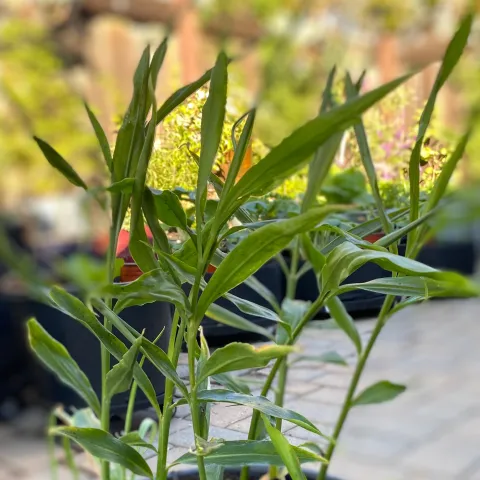
Ginger by Shin Liu
UC Master Gardeners of Santa Clara County: Page

Ginger

Ginger, Zingiber officionale, is a tropical plant originally from southern China. It can be grown in Northern California with the right amount of care. The “root” portion used in cooking is a rhizome, technically not a root but an underground stem.
View Page
Primary Image
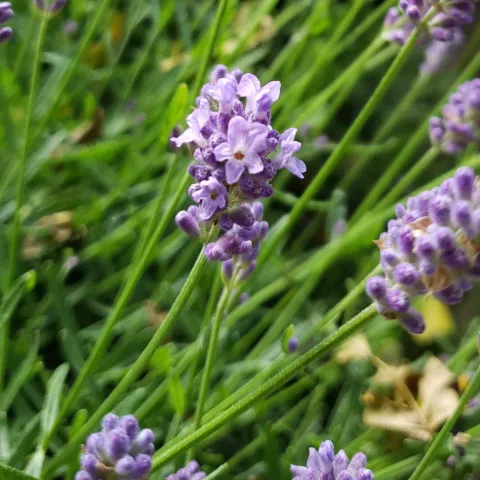
Lavender by Elizabeth Evans
UC Master Gardeners of Santa Clara County: Page

Lavender

Lavender has many uses in the home garden. It can be a hedge, border, or part of an herb garden. In culinary use, lavender flowers are used in herbal teas and desserts. There are many more uses for lavender in fragrances, potpourris and sachets, oils, and aromatherapy. The various cultivars of lavender…
View Page
Primary Image
Lemongrass2 by Mildy Weinstein
UC Master Gardeners of Santa Clara County: Page

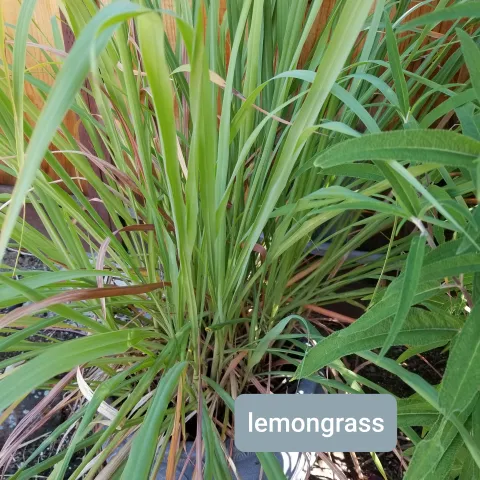
Lemongrass

The most popular variety of lemongrass grown is Cymbopogon citratus, a native of southern India and Ceylon. The fast growing plant has slender blue-green leaves that turn red in the fall. While lemongrass is widely used as a fragrance in perfumes and cosmetics, the focus here is on its culinary value. The…
View Page
Primary Image
Lovage by Brian Okamoto
UC Master Gardeners of Santa Clara County: Page

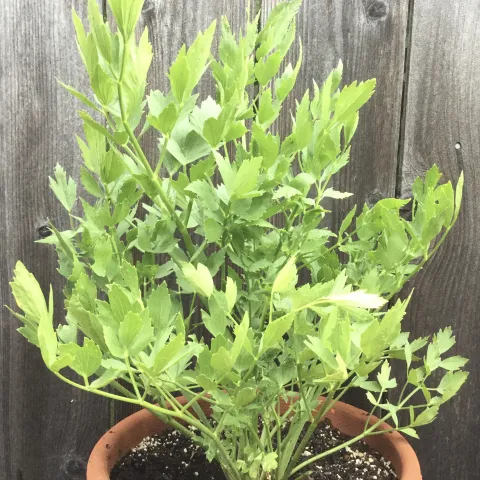
Lovage

Lovage, Levisticum officinale, originates from the Eastern Mediterranean. It is typically grown for its leaves, stems, roots, and seeds. The leaves have a flavor similar to celery, only stronger. They are commonly used to flavor salads, soups, and stews. Lovage is considered to be an herb, but the stems can…
View Page
Primary Image
Herb-Marjoram-MG-Karen-Schaffer.jpg
UC Master Gardeners of Santa Clara County: Page

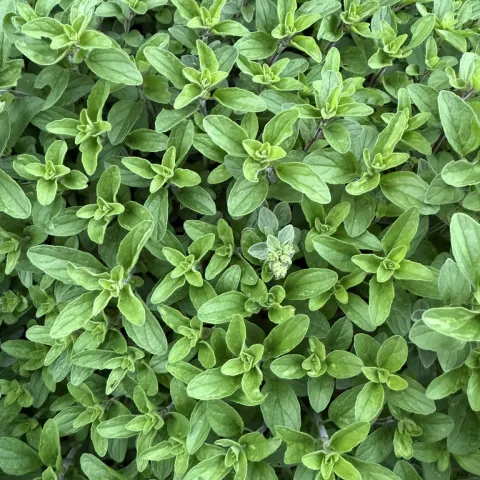
Marjoram

Marjoram is grown for its aromatic leaves, which can be used fresh or dried. Closely related to oregano, they are sometimes used interchangeably in recipes. In general, marjoram has a sweeter, more floral flavor than oregano. Enjoy marjoram in soups, egg dishes, beef and chicken dishes, sausages, and cheese…
View Page
Primary Image
Herb-Oregano-Greek-MG-Ying-Chen
UC Master Gardeners of Santa Clara County: Page

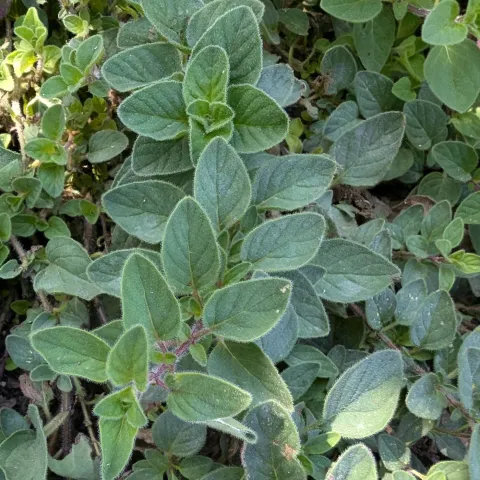
Oregano

Oregano is grown for the aromatic leaves which can be used fresh or dried. Closely related to marjoram, oregano is stronger and more pungent. There are many varieties of oregano, for both culinary as well as ornamental use. With a wide range of flavor characteristics, you may wish to grow different varieties…
View Page
Primary Image
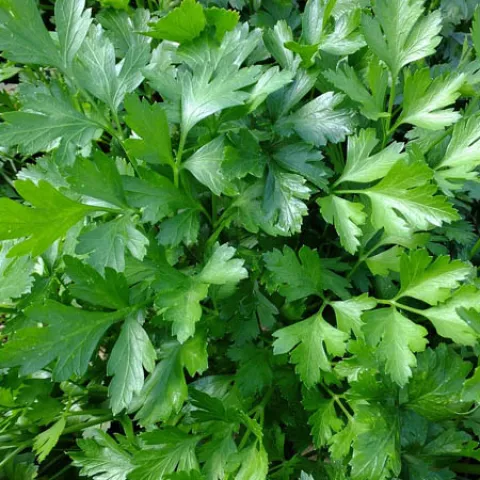
Parsley cropped UCANR
UC Master Gardeners of Santa Clara County: Page

Parsley

Parsley is cold hardy and can be productive year-round. It comes in both curly and flat-leaved (Italian) varieties. It is a biennial, meaning it will send up a flower stalk after its first winter, so it is best to set out fresh transplants every spring.
View Page
Primary Image
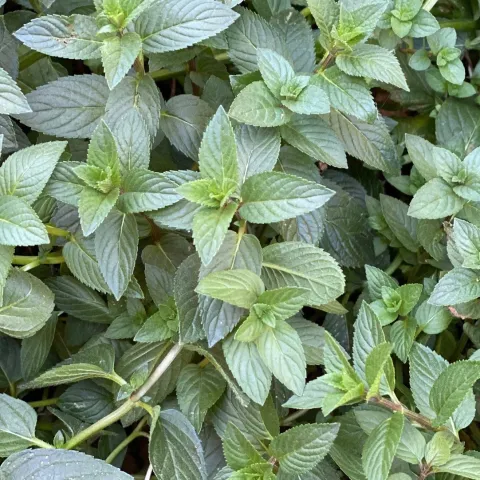
Peppermint by Yahui Tu
UC Master Gardeners of Santa Clara County: Page

Mint

Of the over 600 varieties of mints, the two most popular are peppermint (Mentha piperita) and spearmint (M. spicata). Peppermint, which is a hybrid of watermint and spearmint, has a higher concentration of menthol than does spearmint. Accordingly, peppermint is more often used in candies, chocolates,…
View Page
Primary Image
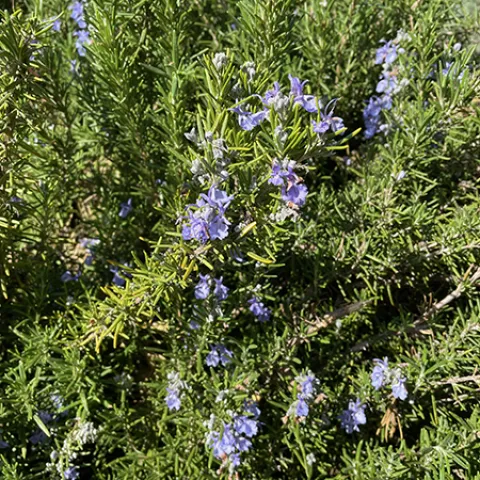
Herb-Rosemary-MG-Karen-Schaffer
UC Master Gardeners of Santa Clara County: Page

Rosemary

Rosemary (Savia rosmarinus, previously Rosmarinus officinalis) is a fragrant, drought tolerant, evergreen perennial that is classified as a subshrub for the woody lower stems that develop over time.  Its many forms range from ground covers to tall shrubs.
View Page
Primary Image
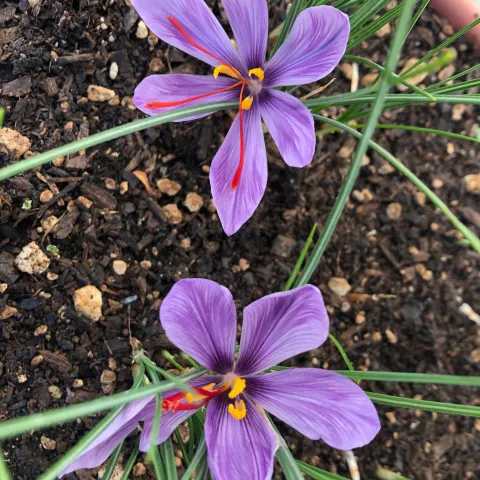
Saffron by Rene Prupes
UC Master Gardeners of Santa Clara County: Page

Saffron

Saffron is a spice that comes from the saffron crocus, Crocus sativus. This fall flowering crocus is distinct from the ornamental spring flowering crocuses. It also must not be confused with the similar but toxic fall flowering Colchicums. The only part used for the spice are the tiny stigmas of the flowers…
View Page