A Natural Solution for California's Herds: African Catfish Peptides

California's cattle producers and agricultural communities are all too familiar with the rising challenge of antibiotic resistance, making common bacterial infections harder to treat in livestock. But imagine a future where we could tackle these infections with a natural, powerful alternative. Our research points to just that: antimicrobial peptides (AMPs) found in African catfish.

We're really excited about these peptides because African catfish thrive in pathogen-rich freshwater, naturally producing these robust immune compounds in their skin mucus as a defense. This natural origin makes them highly appealing alternatives to synthetic drugs.

Predicted Safety and Potent Action

One of the most compelling aspects of these AMPs is their predicted safety for mammals. Our initial computer analyses suggest that various catfish AMPs are generally recognized as safe (GRAS). We predict they'll be absorbed in the human intestine without causing liver, brain, or heart toxicity. Furthermore, lab tests on a promising peptide, NACAP-II, confirmed it was non-hemolytic, meaning it didn't damage rabbit red blood cells—a strong indicator of its potential safety for mammalian cells.

Beyond safety, these peptides demonstrate effectiveness against problematic bacteria. One study revealed NACAP-II's strong activity against Extended-Spectrum Beta-Lactamase (ESBL)-producing Escherichia coli—a critical concern for both animal and human health due to its resistance to many common antibiotics. Another peptide, ACAP-IV, also showed antibacterial activity against E. coli and Staphylococcus aureus. We believe these AMPs work by directly disrupting bacterial cell membranes, a mechanism that makes it harder for bacteria to develop resistance compared to how they resist traditional antibiotics.
Central Coast Rangeland Coalition: Page

Vision

Our VisionThe Central Coast Rangeland Coalition envisions vibrant, productive, diverse, and sustainable rangelands, human communities, and working and natural landscapes on California’s Central Coast. 
View Page

Thank you for all your efforts in 2025

December 23, 2025
By Glenda L Humiston
 As 2025 comes to a close, I want to thank each and every one of you for everything that you do for our communities all across California.You are the reason we are able to share the latest science and develop the partnerships and programs that help solve many of our most pressing challenges – in…
View Article
Primary Image
Rainwater Runoff_Courtesy Gary Kernick
UC Master Gardener Program of Contra Costa County: Article

Rainwater Harvesting for the Win — Part II

December 22, 2025
By Liz Rottger
 Water is the very definition of life. It is the source of all life on Earth; it is what we search for on other planets to prove the possibility of life there. Without water, everything dies. Extreme heat and drought are the enemies of all life.But we are running short on water. Droughts are becoming…
View Article
Primary Image
Grafting no text UCANR
UC Master Gardener Program of Contra Costa County: Article

Tree Grafting for Garden Fun

December 22, 2025
By David George
Plant and tree grafting is an ancient and worldwide practice. I was fascinated on a recent trip to the Mekong Delta in Vietnam by a demonstration of jackfruit tree grafting by a family nursery supplying trees to nearby Saigon markets. What struck me most about this demonstration, half a planet away from…
View Article
Primary Image
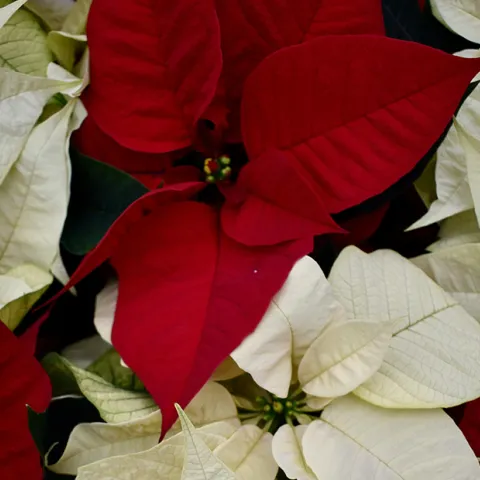
Poinsettia_Pexels_Kstankss
UC Master Gardener Program of Contra Costa County: Article

Poinsettia (Euphorbia pulcherrima)

December 22, 2025
By Robin Mitchell
by Cheryl Schmidt Who doesn’t love this vibrant plant in December? It comes from Mexico and is pronounced "poin-set-te-uh."  It loves warmer weather, between 65 °F and 70 °F. What do you do with these plants after the holidays? Many throw them away, but you don’t have to. You could keep it as…
View Article
Primary Image
Food Donations_Photo Courtesy Greg Letts
UC Master Gardener Program of Contra Costa County: Article

Fresh Produce, Real Impact: Fighting Food Insecurity in Contra Costa County

December 22, 2025
By Linda Weissman
Every Wednesday morning, something extraordinary happens. Nearly 300 pounds of sun-warmed tomatoes, crisp lettuce, and freshly picked herbs travel just a few short miles from soil to table—not to a farmers market or grocery store, but directly into the hands of local families who depend on this harvest to…
View Article