A Natural Solution for California's Herds: African Catfish Peptides

California's cattle producers and agricultural communities are all too familiar with the rising challenge of antibiotic resistance, making common bacterial infections harder to treat in livestock. But imagine a future where we could tackle these infections with a natural, powerful alternative. Our research points to just that: antimicrobial peptides (AMPs) found in African catfish.

We're really excited about these peptides because African catfish thrive in pathogen-rich freshwater, naturally producing these robust immune compounds in their skin mucus as a defense. This natural origin makes them highly appealing alternatives to synthetic drugs.

Predicted Safety and Potent Action

One of the most compelling aspects of these AMPs is their predicted safety for mammals. Our initial computer analyses suggest that various catfish AMPs are generally recognized as safe (GRAS). We predict they'll be absorbed in the human intestine without causing liver, brain, or heart toxicity. Furthermore, lab tests on a promising peptide, NACAP-II, confirmed it was non-hemolytic, meaning it didn't damage rabbit red blood cells—a strong indicator of its potential safety for mammalian cells.

Beyond safety, these peptides demonstrate effectiveness against problematic bacteria. One study revealed NACAP-II's strong activity against Extended-Spectrum Beta-Lactamase (ESBL)-producing Escherichia coli—a critical concern for both animal and human health due to its resistance to many common antibiotics. Another peptide, ACAP-IV, also showed antibacterial activity against E. coli and Staphylococcus aureus. We believe these AMPs work by directly disrupting bacterial cell membranes, a mechanism that makes it harder for bacteria to develop resistance compared to how they resist traditional antibiotics.
UC Master Gardener Program: Page

Tools

Only a few good-quality tools are necessary for a small home garden: Spade or spading fork. Use to turn the ground, to turn under the organic matter, and to break up large clumps of soil. Rake. Use to smooth out the soil after spading and after preparing the seedbed.
View Page
UC Master Gardener Program: Page

Seeds and transplants

You can grow many vegetables from seed, but you can also buy young plants from a nursery. Nursery plants are grown from seed under sheltered conditions and are started earlier than you could safely plant the seed outdoors.
View Page
UC Master Gardener Program: Page

Early start on growing vegetables

Growing your own transplants indoors can extend your gardening season by several weeks, reduce your gardening costs, and allow you to grow transplants of some of the hard-to-find varieties of crops.
View Page
UC Master Gardener Program: Page

Artichokes

Artichokes are perennial (annual in low desert regions) cool-season vegetables with silver-green foliage. The bud, or immature flower, is the part of the artichoke that is harvested.
View Page
UC Master Gardener Program: Page

Asparagus

Asparagus is a very hardy, perennial, cool-season vegetable that can live 12 to 15 years or longer. It is one of the most valuable early vegetables and is well adapted to freezer storage. During the harvest period, spears develop daily from underground crowns.
View Page
Primary Image
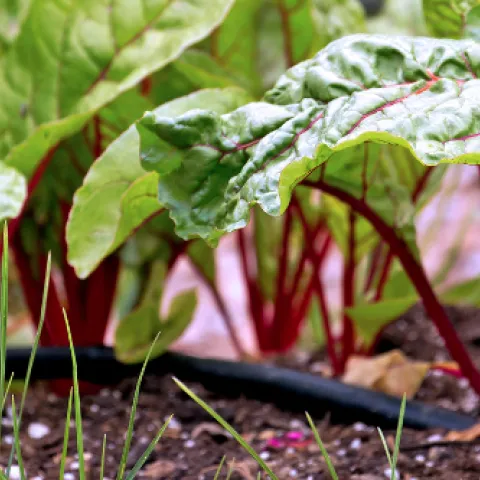
the base of swiss chard plants in a garden bed
UC Master Gardener Program: Page

Vegetables, Fruits & Herbs

Welcome to your future guide for growing vegetables and fruits in California! We're building a comprehensive resource to help you grow delicious, healthy food in your garden.
View Page
UC Master Gardener Program: Page

LIVE Series

We hope you join us for this new LIVE series to learn more about gardening. There is no cost to participate and the webinars are open to all. If you cant attend the live webinar, a recording will be available on YouTube.
View Page
UC Master Gardener Program: Page

Online Learning Opportunities Hosted on Extension Campus

eXtension Campus is an online learning platform that provides objective research-based information and learning opportunities that help people improve their lives. Campus hosts live webinars and online courses in many topics including Yard and Garden.
View Page