A Natural Solution for California's Herds: African Catfish Peptides

California's cattle producers and agricultural communities are all too familiar with the rising challenge of antibiotic resistance, making common bacterial infections harder to treat in livestock. But imagine a future where we could tackle these infections with a natural, powerful alternative. Our research points to just that: antimicrobial peptides (AMPs) found in African catfish.

We're really excited about these peptides because African catfish thrive in pathogen-rich freshwater, naturally producing these robust immune compounds in their skin mucus as a defense. This natural origin makes them highly appealing alternatives to synthetic drugs.

Predicted Safety and Potent Action

One of the most compelling aspects of these AMPs is their predicted safety for mammals. Our initial computer analyses suggest that various catfish AMPs are generally recognized as safe (GRAS). We predict they'll be absorbed in the human intestine without causing liver, brain, or heart toxicity. Furthermore, lab tests on a promising peptide, NACAP-II, confirmed it was non-hemolytic, meaning it didn't damage rabbit red blood cells—a strong indicator of its potential safety for mammalian cells.

Beyond safety, these peptides demonstrate effectiveness against problematic bacteria. One study revealed NACAP-II's strong activity against Extended-Spectrum Beta-Lactamase (ESBL)-producing Escherichia coli—a critical concern for both animal and human health due to its resistance to many common antibiotics. Another peptide, ACAP-IV, also showed antibacterial activity against E. coli and Staphylococcus aureus. We believe these AMPs work by directly disrupting bacterial cell membranes, a mechanism that makes it harder for bacteria to develop resistance compared to how they resist traditional antibiotics.
Primary Image
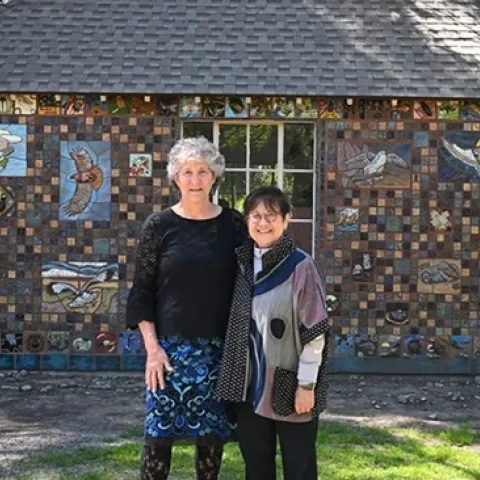
UC Davis distinguished professor emerita Diane Ullman (left) and Gale Okumura, lecturer emerita, Department of Design, stand in front of their project, "A Bird's Eye View," at the California Raptor Center. (Photo by Kathy Keatley Garvey)
Bug Squad: Article

Of Raptors and Insects

February 4, 2025
By Kathy Keatley Garvey
When you visit the California Raptor Center (part of the UC Davis School of Veterinary Medicine), during the 14th annual UC Davis Biodiversity Museum Day on Saturday, Feb. 8, be sure to see "A Bird's Eye View," a ceramic-mosaic mural that graces an outer wall of the visitor center.
View Article
Primary Image
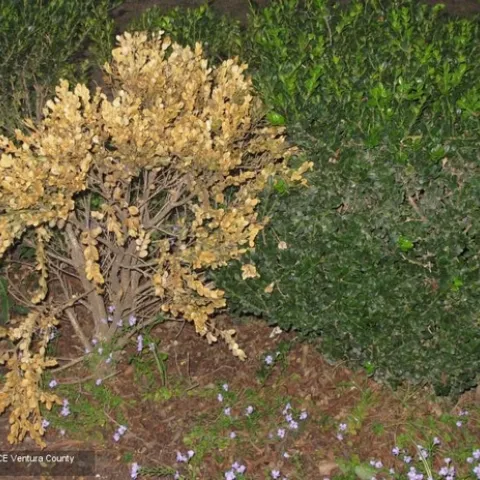
A brown, dying shrub in front of a row of healthy green shrubs.
Pests in the Urban Landscape: Article

Wilted plants: lack of water or disease?

February 4, 2025
By Belinda Messenger-Sikes
A well-watered plant that suddenly wilts or unexpectedly drops its leaves could be infected with the soil pathogen Phytophthora. The disease it causes, Phytophthora root and crown rot, can affect many plants, including ornamental trees and shrubs, fruit trees, and vegetables.
View Article
Primary Image
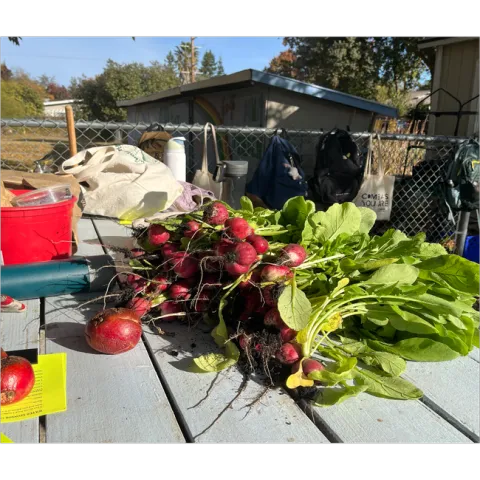
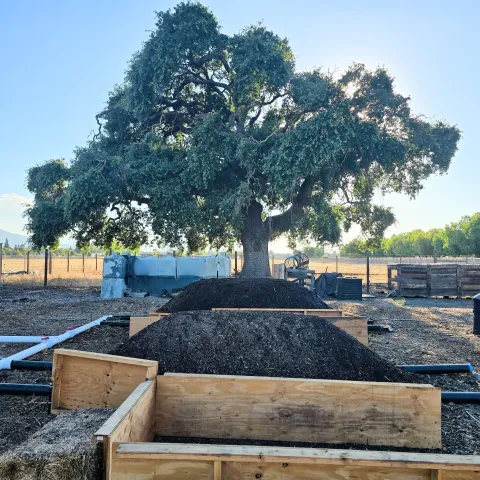
Radishes from the test garden
The Savvy Sage: Article

Fall Raised Bed Experiment at Grace Garden in Davis, CA

February 4, 2025
This project was developed by Heloisa Kinder, Karen Slinkard, Karen Leaf and Shawn Owens. This report summarizes the results of our fall 2024 garden project focused on cultivating broccoli, kale, beets, radishes, and carrots.
View Article
UC Cooperative Extension Imperial County: Article

Advances in Irrigation Tools & Technologies Workshop

February 4, 2025
Join us for the upcoming Advances in Irrigation Tools and Technologies Workshop Date: February 27, 2025 Time: 8:00am - 2:30pm (PST) Location: Barbara Worth Country Club, 2050 Country Club Dr.
View Article
Primary Image
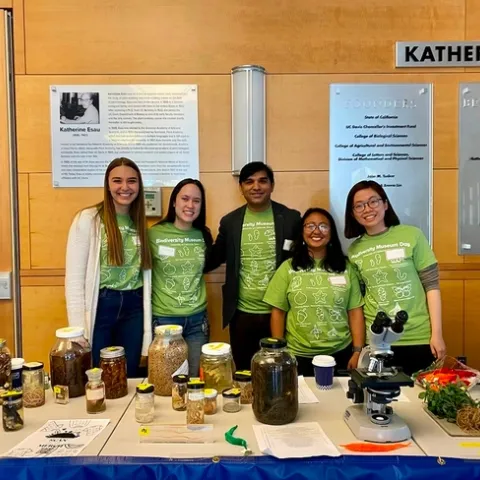
This crew, shown here with nematology faculty member Shahid Siddique, staffed the nematology collection at the 12th annual UC Davis Biodiversity Museum Day. With him (from left) were then doctoral students Alison Coomer (now Blundell), Veronica Casey, Pallavi Shakya and Ching-Jung Lin.

Right This Way to the UC Davis Nematode Collection!

February 3, 2025
By Kathy Keatley Garvey
Nematodes--and the faculty and graduate students who study them--will share the spotlight from 10 a.m. to 2 p.m., Saturday, Feb. 8 in the Katherine Esau Science Hall. The occasion: the 14th annual UC Davis Biodiversity Museum Day. The Esau Hall is located near Briggs Hall, off Kleiber Hall Lane.
View Article
Primary Image
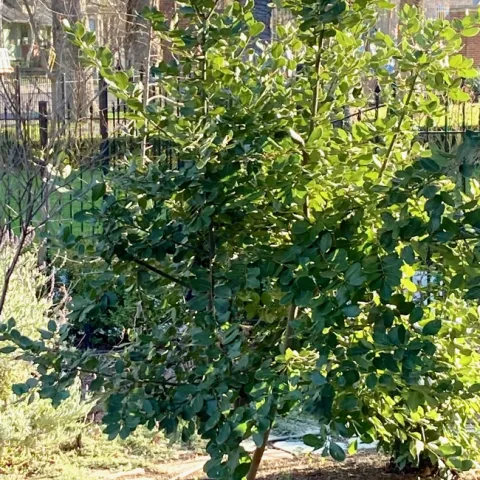
Photo of a California bay laurel tree.
The Savvy Sage: Article

Notes from My Garden: Right Tree, Right Place

February 3, 2025
Removing a tree feels like the worst kind of gardening failure, but I did it twice anyway. Let me explain. When we bought our house late in 2016, there were two trees on the property.
View Article