A Natural Solution for California's Herds: African Catfish Peptides

California's cattle producers and agricultural communities are all too familiar with the rising challenge of antibiotic resistance, making common bacterial infections harder to treat in livestock. But imagine a future where we could tackle these infections with a natural, powerful alternative. Our research points to just that: antimicrobial peptides (AMPs) found in African catfish.

We're really excited about these peptides because African catfish thrive in pathogen-rich freshwater, naturally producing these robust immune compounds in their skin mucus as a defense. This natural origin makes them highly appealing alternatives to synthetic drugs.

Predicted Safety and Potent Action

One of the most compelling aspects of these AMPs is their predicted safety for mammals. Our initial computer analyses suggest that various catfish AMPs are generally recognized as safe (GRAS). We predict they'll be absorbed in the human intestine without causing liver, brain, or heart toxicity. Furthermore, lab tests on a promising peptide, NACAP-II, confirmed it was non-hemolytic, meaning it didn't damage rabbit red blood cells—a strong indicator of its potential safety for mammalian cells.

Beyond safety, these peptides demonstrate effectiveness against problematic bacteria. One study revealed NACAP-II's strong activity against Extended-Spectrum Beta-Lactamase (ESBL)-producing Escherichia coli—a critical concern for both animal and human health due to its resistance to many common antibiotics. Another peptide, ACAP-IV, also showed antibacterial activity against E. coli and Staphylococcus aureus. We believe these AMPs work by directly disrupting bacterial cell membranes, a mechanism that makes it harder for bacteria to develop resistance compared to how they resist traditional antibiotics.
Stanislaus County: Article

2022 Weekly Evapotranspiration Reports

February 1, 2025
By Sandi L Gudino
Hello All:Please find the attached document to provide the 2022 previous week’s estimated water use report in terms of evapotranspiration for almonds, peaches, walnuts, established vineyard, alfalfa, and pasture in Stanislaus County. This report may be used as a guide in your irrigation…
View Article
Nutrition Policy Institute: Article

The California Fruit and Vegetable EBT Pilot Project at Farmers’ Markets

February 1, 2025
By Sridharshi C Hewawitharana, Ron Strochlic, Samantha Sam-Chen, Wendi Gosliner
Evaluation Findings Research Brief • February 2025 • Download PDF (270 KB)BackgroundIn 2023, the California Department of Social Services initiated the California EBT Fruit and Vegetable Pilot Project (CF&V), testing a new approach for increasing access to fruits and vegetables (FV) among…
View Article
Primary Image
CASI Tillage Management Timeline 2025

Timeline of California Tillage Management

February 1, 2025
By Jeffrey P Mitchell
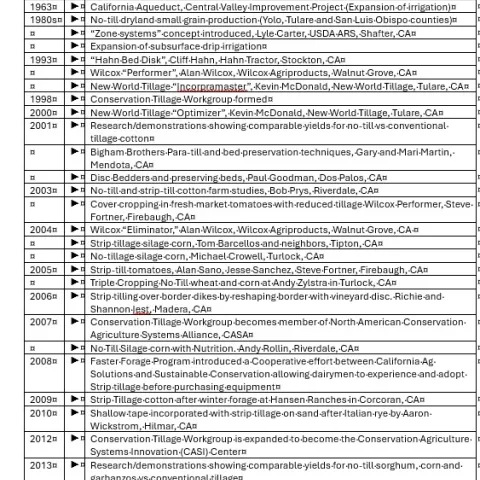
February 1, 2025 A detailed timeline of advances in tillage management in California has been prepared by a large group of CASI partners for possible publication in an upcoming article about the history of conservation agriculture in the state.
View Article
Primary Image
Wilted tomato plants in front of a wooden fence.
Fresno Gardening Green: Article

Gardening in a hotter climate

February 1, 2025
It's official, climate experts have declared 2024 as the hottest year on record. Not only did temperatures run higher than normal worldwide, but many areas including the Central Valley in California also endured reoccurring heat spikes or long periods of extremely high temperatures.
View Article
Primary Image
Blank image for layout spacing
The Savvy Sage: Article

February Garden Tips and Vegetable Planting Guide

January 31, 2025
Winter Cleanup - Continue preparations for the busy spring planting season. Clean and rinse pots with a diluted solution of bleach one part bleach to nine parts water. Check pots after any rain, shallow pools of water will provide egg laying opportunities for mosquitos. Clean and sharpen tools.
View Article
Primary Image
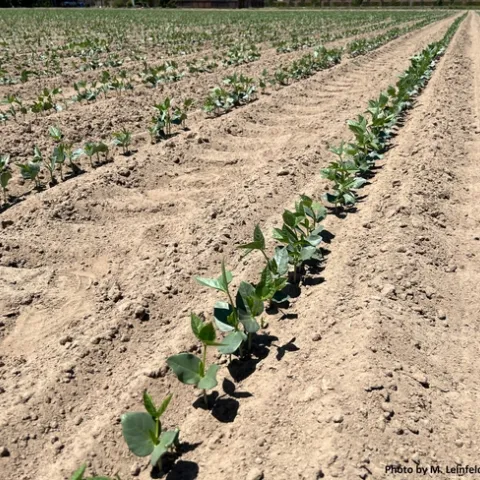
Figure 1. The trial was planted in a commercial field with well-drained soil in Stanislaus County.
SJC and Delta Field Crops: Article

2024 Blackeye Bean Variety Evaluation

January 31, 2025
By Michelle M Leinfelder-Miles
We evaluated blackeye bean varieties in a commercial field in Stanislaus County. Seven varieties from the University of California blackeye breeding program were planted on July 1st. The soil type at the trial location was well-drained (Dinuba and Hanford sandy loams, Tujunga loamy sand, Fig.
View Article