A Natural Solution for California's Herds: African Catfish Peptides

California's cattle producers and agricultural communities are all too familiar with the rising challenge of antibiotic resistance, making common bacterial infections harder to treat in livestock. But imagine a future where we could tackle these infections with a natural, powerful alternative. Our research points to just that: antimicrobial peptides (AMPs) found in African catfish.

We're really excited about these peptides because African catfish thrive in pathogen-rich freshwater, naturally producing these robust immune compounds in their skin mucus as a defense. This natural origin makes them highly appealing alternatives to synthetic drugs.

Predicted Safety and Potent Action

One of the most compelling aspects of these AMPs is their predicted safety for mammals. Our initial computer analyses suggest that various catfish AMPs are generally recognized as safe (GRAS). We predict they'll be absorbed in the human intestine without causing liver, brain, or heart toxicity. Furthermore, lab tests on a promising peptide, NACAP-II, confirmed it was non-hemolytic, meaning it didn't damage rabbit red blood cells—a strong indicator of its potential safety for mammalian cells.

Beyond safety, these peptides demonstrate effectiveness against problematic bacteria. One study revealed NACAP-II's strong activity against Extended-Spectrum Beta-Lactamase (ESBL)-producing Escherichia coli—a critical concern for both animal and human health due to its resistance to many common antibiotics. Another peptide, ACAP-IV, also showed antibacterial activity against E. coli and Staphylococcus aureus. We believe these AMPs work by directly disrupting bacterial cell membranes, a mechanism that makes it harder for bacteria to develop resistance compared to how they resist traditional antibiotics.
Primary Image
The OMRI seal may appear on pesticides determined as organically acceptable by the Organic Materials Review Institute.
Pests in the Urban Landscape: Article

Organic, Natural, and Less Toxic: What’s the Difference?

July 11, 2024
By Lauren Fordyce, Belinda Messenger-Sikes, Karey Windbiel-Rojas
You've heard of terms such as green, organic, natural, ecofriendly, and less toxic to describe pest control products and services. But what do these terms really mean? To different people, they can mean different things, creating obvious confusion.
View Article
Primary Image
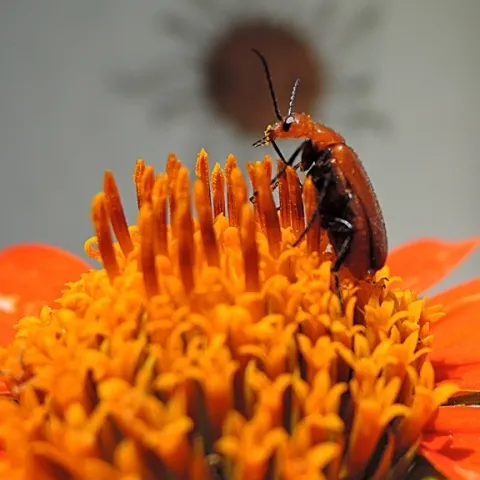
A blister beetle (family Meloidae) eating pollen from the Mexican sunflower, Tithonia rotundifola. (Photo by Kathy Keatley Garvey)
Bug Squad: Article

The Secret Life of a Blister Beetle

July 11, 2024
By Kathy Keatley Garvey
Blister beetles (family Meloidae) are so named because they emit a poisonous chemical, cantharidin, that can blister your skin. Don't even think about touching them! Blister beetles can infest alfalfa hay, and are toxic--even deadly--to livestock.
View Article
Primary Image
photos by Lorie Hammond
The Savvy Sage: Article

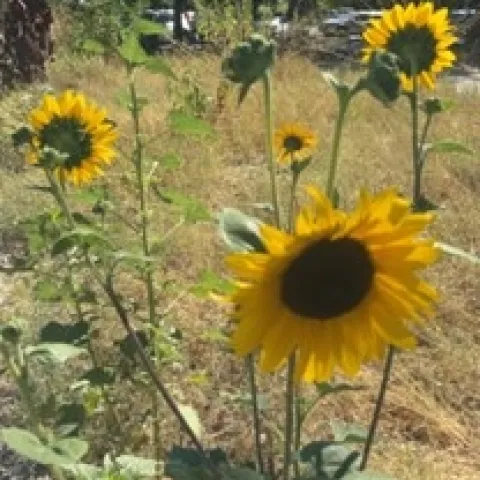
Sunflower Art and Science-A Midsummer Treat

July 10, 2024
In conjunction with Davis Farm to School, I have been developing a partnership, as a Master Gardener, withGanHaverim Preschool in Davis. It began with a teacher workshop in early June, at which we planned the preschool summer garden.
View Article
Primary Image
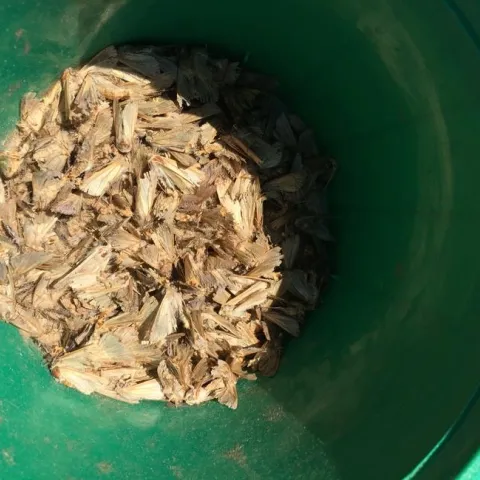
Figure 1. Pheromone bucket trap showing armyworm moths.
SJC and Delta Field Crops: Article

2024 Delta Rice Armyworm Monitoring

July 10, 2024
By Michelle M Leinfelder-Miles
UCCE is monitoring armyworms in rice again in 2024. Our monitoring involves scouting for damage and deployment of pheromone bucket traps that catch the moths (Fig. 1). I have traps at three Delta locations, and my colleague, Luis Espino, is monitoring fields in the Sacramento Valley.
View Article
Primary Image
photos by Jennifer DeDora
Under the Solano Sun: Article

Watermelon Plant- Peperomia argyreia

July 10, 2024
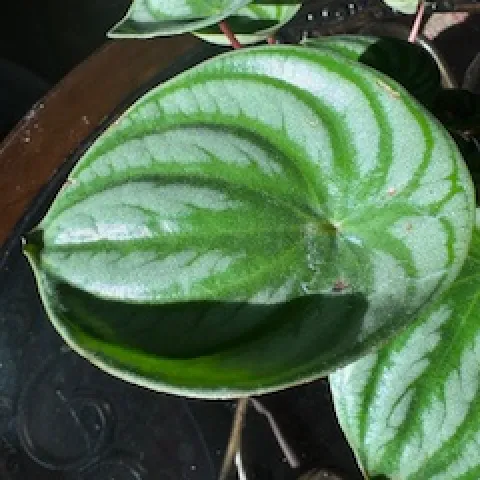
The leaves of this unique-looking house plant really do look like the rind of a ripe watermelon. The stems are also reminiscent of the fruit-they are a rich red, just like the edible flesh of a ready-to-eat watermelon. I purchased this houseplant as a gift to myself, and I'm very happy I did.
View Article
Tulare County Cooperative Extension: Article

Topics in Subtropics Spring 2024

July 10, 2024
Effectiveness of Asian citrus psyllid management in huanglongbing treatment zones in residential Southern California Managed honeybees in a wet year Threats to citrus orchards in California by synergistic effects of dry root rot and phytophthora root and crown rot Microbial Safety in Avocado Farms H...
View Article
UC Cooperative Extension Imperial County: Article

July 2024

July 10, 2024
SUMMER COVER CROP OPTIONS FOR MANAGING SOIL HEALTH, NITROGEN, AND PEST WORKSHOP 2024 INTERN PRESENTATION INCREASE YOUR FARM'S INCOME WITH REGENERATIVE MANAGEMENT UPDATES ON SUGAR BEETS AND BEET LEAFHOPPERS MAY GUAYULE BE A FUTURE CROP OF THE IMPERIAL VALLEY?
View Article