A Natural Solution for California's Herds: African Catfish Peptides

California's cattle producers and agricultural communities are all too familiar with the rising challenge of antibiotic resistance, making common bacterial infections harder to treat in livestock. But imagine a future where we could tackle these infections with a natural, powerful alternative. Our research points to just that: antimicrobial peptides (AMPs) found in African catfish.

We're really excited about these peptides because African catfish thrive in pathogen-rich freshwater, naturally producing these robust immune compounds in their skin mucus as a defense. This natural origin makes them highly appealing alternatives to synthetic drugs.

Predicted Safety and Potent Action

One of the most compelling aspects of these AMPs is their predicted safety for mammals. Our initial computer analyses suggest that various catfish AMPs are generally recognized as safe (GRAS). We predict they'll be absorbed in the human intestine without causing liver, brain, or heart toxicity. Furthermore, lab tests on a promising peptide, NACAP-II, confirmed it was non-hemolytic, meaning it didn't damage rabbit red blood cells—a strong indicator of its potential safety for mammalian cells.

Beyond safety, these peptides demonstrate effectiveness against problematic bacteria. One study revealed NACAP-II's strong activity against Extended-Spectrum Beta-Lactamase (ESBL)-producing Escherichia coli—a critical concern for both animal and human health due to its resistance to many common antibiotics. Another peptide, ACAP-IV, also showed antibacterial activity against E. coli and Staphylococcus aureus. We believe these AMPs work by directly disrupting bacterial cell membranes, a mechanism that makes it harder for bacteria to develop resistance compared to how they resist traditional antibiotics.
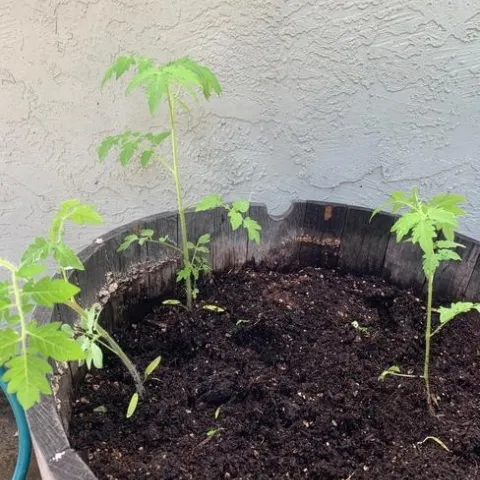
Primary Image
photos by Jennifer Ward
Under the Solano Sun: Article

Worm Bin Fun

December 19, 2023
My worm bin has been a source of fun for the past three years. The worm compost allows me to use up food scraps and the dark compost goes right back into the garden--kind of a table to farm to table cycle. Mid-summer I used some of the worm compost in a half-barrel planter.
View Article
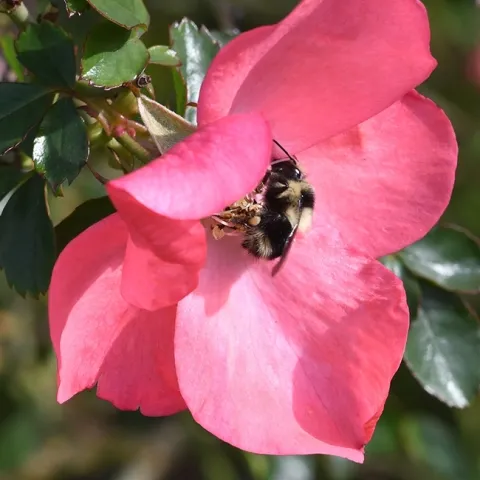
Primary Image
A black-tailed bumble bee, Bombus melanopygus, foraging on a rose in Benicia, Solano County, on Jan. 25, 2020. (Photo by Kathy Keatley Garvey)
Entomology & Nematology News: Article

Who Will Spot and Photograph the First Bumble Bee of the Year?

December 19, 2023
By Kathy Keatley Garvey
Who will spot and photograph the first bumble bee of the year in the two-county area of Yolo and Solano? The Bohart Museum of Entomology is sponsoring its fourth annual Robbin Thorp Memorial First-Bumble Bee-of-the-Year Contest, which begins at 12:01, Jan. 1, 2024.
View Article
Livestock, Range and Natural Resources: Article

Otoño 2022

December 19, 2023
En este nmero: La Neospora en vacas para carne Hojas nuevas sobre la salud vacuna Robles peligrosos...
View Article
Livestock, Range and Natural Resources: Article

December 2023

December 19, 2023
In this issue: -Poultry workshop recording available -Neonatal Beef Calf workshop -Lambing School -California Rancher Sustainability Assessment module: Succession Planning...
View Article
Nutrition Policy Institute News: Article

Study finds that SNAP and WIC stores offer healthier food retail environment in low-income California neighborhoods

December 19, 2023
By Brianna Aguayo Villalon, Miranda W Brown, Richard Pulvera
A recent study examined how stores' participation in federal assistance programs, such as Special Supplemental Nutrition Program for Women, Infants, and Children and the Supplemental Nutrition Assistance Program commonly known as WIC and SNAP or CalFresh in Californiainfluence the availability and q...
View Article
Primary Image
Gardens at Monticello [01] by SchuminWeb is licensed under CC BY-SA 2.0.
Under the Solano Sun: Article

Early American Gardeners and Beyond

December 19, 2023
While celebrating Thanksgiving this year, I began thinking about our early American ancestors and how most would have had to have at least a simple kitchen garden to sustain themselves and their families.
View Article
ANR Employee News: Article

Mileage reimbursement rates change Jan. 1

December 18, 2023
By Pamela S Kan-Rice
UC's mileage reimbursement rates for expenses incurred in connection with the business use of a private automobile will change in accordance with the Internal Revenue Service standard mileage rates published in IRS Notice 2024-08.
View Article