A Natural Solution for California's Herds: African Catfish Peptides

California's cattle producers and agricultural communities are all too familiar with the rising challenge of antibiotic resistance, making common bacterial infections harder to treat in livestock. But imagine a future where we could tackle these infections with a natural, powerful alternative. Our research points to just that: antimicrobial peptides (AMPs) found in African catfish.

We're really excited about these peptides because African catfish thrive in pathogen-rich freshwater, naturally producing these robust immune compounds in their skin mucus as a defense. This natural origin makes them highly appealing alternatives to synthetic drugs.

Predicted Safety and Potent Action

One of the most compelling aspects of these AMPs is their predicted safety for mammals. Our initial computer analyses suggest that various catfish AMPs are generally recognized as safe (GRAS). We predict they'll be absorbed in the human intestine without causing liver, brain, or heart toxicity. Furthermore, lab tests on a promising peptide, NACAP-II, confirmed it was non-hemolytic, meaning it didn't damage rabbit red blood cells—a strong indicator of its potential safety for mammalian cells.

Beyond safety, these peptides demonstrate effectiveness against problematic bacteria. One study revealed NACAP-II's strong activity against Extended-Spectrum Beta-Lactamase (ESBL)-producing Escherichia coli—a critical concern for both animal and human health due to its resistance to many common antibiotics. Another peptide, ACAP-IV, also showed antibacterial activity against E. coli and Staphylococcus aureus. We believe these AMPs work by directly disrupting bacterial cell membranes, a mechanism that makes it harder for bacteria to develop resistance compared to how they resist traditional antibiotics.
Primary Image
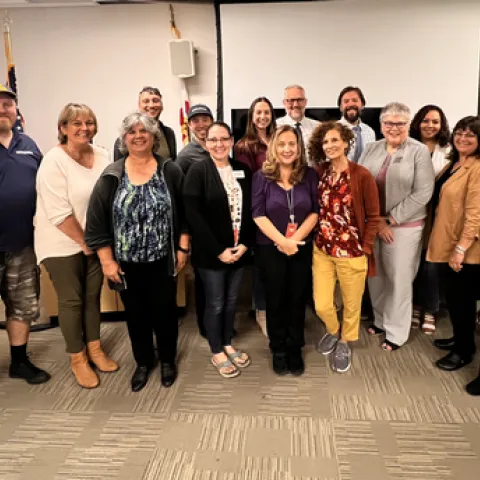
Group photo with UC Cooperative Extension staff
ANR Adventures: Article

Meeting our partners in San Diego

October 24, 2023
By Brent Hales
Recently I had the pleasure of visiting San Diego with Lynn Schmitt-McQuitty. While in town, I met with members of San Diego County Farm Bureau, San Diego County supervisors and county administrators to learn about their concerns and to find out how UC ANR can be a better partner.
View Article
Primary Image
grupo de personas observando la queda de un arbusto seco
Comunidades Saludables: Article

El asesor de incendios de Extensión Cooperativa y estudiantes de posgrado de la UC se reúnen en torno al incendio

October 24, 2023
By Basilisa M Rawleigh
Adems de provocar incendios con fines de investigacin, Luca Carmignani, asesor en materia de incendios de Extensin Cooperativa de la UC para los condados de San Diego, Orange, Los ngeles y Riverside, ha empezado a aprovechar su conexin con los campus locales de la UC ofreciendo oportunidades de apre...
View Article
Article

Winter Curtailment 2023

October 24, 2023
By Pamela S Kan-Rice
Similar to previous years, UC ANR units including research and extension centers, UCCE county offices, the Second Street Building in Davis and the UCOP Franklin Building in Oakland will be closed from Dec. 25, 2023, through Jan. 2, 2024, except for essential services.
View Article
Primary Image
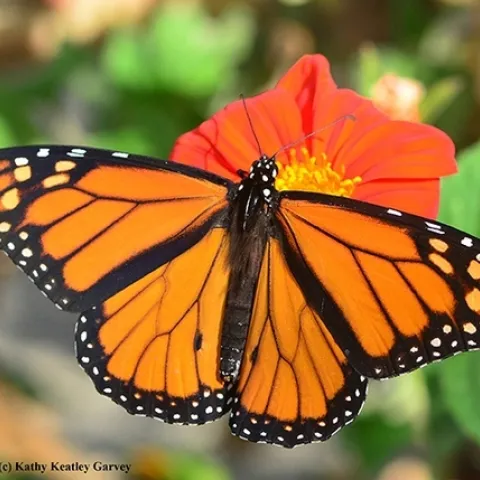
A male monarch nectaring on Mexican sunflower, Tithonia rotundifola. (Photo by Kathy Keatley Garvey)
Entomology & Nematology News: Article

Wings Up! Bohart Museum Sets Open House on Monarchs

October 24, 2023
By Kathy Keatley Garvey
Wings up! Butterfly and monarch scientists will discuss their expertise at the Bohart Museum of Entomology open house on "Monarchs," set Saturday, Nov. 4 from 1 to 4 p.m. The event, free and family friendly, will be held in Room 1124 of the Academic Surge Building, Crocker Lane.
View Article
Kern County: Article

4-H Council Officer Elections

October 24, 2023
Voting will start on Monday, November 6 and will run for 2 weeks through Monday, November 20. The list of nominees is attached, but write-in candidates are also permitted. All fully active adult volunteers and senior 4-H youth members who have a 4-H age of between 13 and 18 are eligible to vote.
View Article