A Natural Solution for California's Herds: African Catfish Peptides

California's cattle producers and agricultural communities are all too familiar with the rising challenge of antibiotic resistance, making common bacterial infections harder to treat in livestock. But imagine a future where we could tackle these infections with a natural, powerful alternative. Our research points to just that: antimicrobial peptides (AMPs) found in African catfish.

We're really excited about these peptides because African catfish thrive in pathogen-rich freshwater, naturally producing these robust immune compounds in their skin mucus as a defense. This natural origin makes them highly appealing alternatives to synthetic drugs.

Predicted Safety and Potent Action

One of the most compelling aspects of these AMPs is their predicted safety for mammals. Our initial computer analyses suggest that various catfish AMPs are generally recognized as safe (GRAS). We predict they'll be absorbed in the human intestine without causing liver, brain, or heart toxicity. Furthermore, lab tests on a promising peptide, NACAP-II, confirmed it was non-hemolytic, meaning it didn't damage rabbit red blood cells—a strong indicator of its potential safety for mammalian cells.

Beyond safety, these peptides demonstrate effectiveness against problematic bacteria. One study revealed NACAP-II's strong activity against Extended-Spectrum Beta-Lactamase (ESBL)-producing Escherichia coli—a critical concern for both animal and human health due to its resistance to many common antibiotics. Another peptide, ACAP-IV, also showed antibacterial activity against E. coli and Staphylococcus aureus. We believe these AMPs work by directly disrupting bacterial cell membranes, a mechanism that makes it harder for bacteria to develop resistance compared to how they resist traditional antibiotics.
Event Primary Image
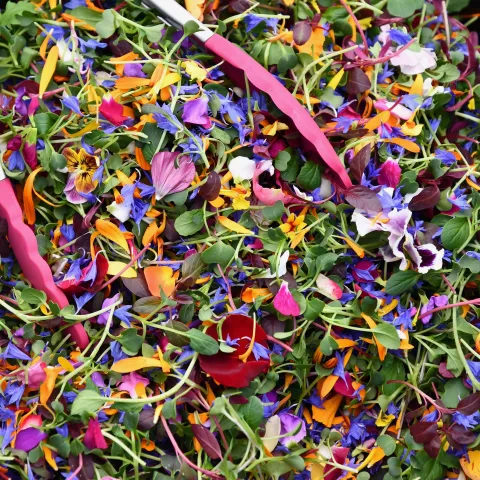
Edible Flowers
UC Marin Master Gardeners: Event

Edible Flowers - Beyond the Beauty

Event Date
Sep 16, 2025

Program: Have you ever wondered if you can eat your flowers? In some cases, you can! Many of these edible beauties are easy to grow over the course of a season. Join us as we discuss which flowers or parts of flowers are safe to eat and, also, some that you should avoid. We will cover ornamentals, herbs,…
UC Marin Master Gardeners
View Event
Page

A Cards demo

<h1>Fake H1</h1>Statistics ProgramsLearn about data visualization and statistical software supported by UC ANR and additional external tools.View ProgramsImage by 200 Degrees (Pixabay)Statistics ProgramsLearn about data visualization and statistical software supported by UC ANR and additional…
View Page
UC Master Gardeners of San Diego County: Page

Insect Resources

  What is an insect?Insects, belonging to the class Insecta or Hexapoda, represent the largest group within the animal kingdom – insects represent 73% of animal species. Key features include segmented bodies, jointed legs, and exoskeletons. The insect body is divided into three parts: the head …
View Page
Primary Image
Fine mesh fabric covering rows of plants in a garden.
Pests in the Urban Landscape: Article

How to Manage Pests Without Pesticides

August 14, 2025
By Lindsey Hack
Want to control pests but don’t want to use pesticides? Good news—there are many alternative options, and most are more effective than pesticides and last longer!  In general, there are three main methods to controlling pests nonchemically: cultural control, physical control, and biological control…
View Article
UC Master Gardeners of San Diego County: Page

Ant Resources

 For more information on identification and management of ants, please visit the University of California Integrated Pest Management page by clicking here
View Page
UC Master Gardeners of San Diego County: Page

Small Space Gardening Resources

 Small Space Gardening Concept: Many people think they don’t have space to have a garden. This display shows how gardens exist in different environments and spaces.  Panel 1 All plants have the same basic requirements. Whether planted in a raised bed, a large planter or in the ground…
View Page
Sample IWP Site: Page

Contact Us

Contact Us PageYour Contact Us page should make it easy for visitors to reach the right people and find essential contact details. Include staff bios with names, titles, and contact information, presented in either a table or a profile grid/list format. Provide your program’s mailing address, phone number,…
View Page
Sample IWP Site: Page

Content Page

Generic Content PageThis is your go-to template for deeper, more detailed content. It’s the place to elaborate on topics that go beyond your homepage blurbs, while still remaining lean and focused. Include a clear title, brief summary or opening blurb, and then break your content into digestible sections…
View Page
UC Master Gardeners of San Diego County: Page

Invasive Species Resources

  Invasive Species Panel #1 – Invasive Plants of San Diego County Concept: A review of plants commonly used in our landscapes and gardens that are considered to be invasive. Mexican Fan Palm (Washingtonia robusta): Once established in natural areas, invasive plants displace native…
View Page