A Natural Solution for California's Herds: African Catfish Peptides

California's cattle producers and agricultural communities are all too familiar with the rising challenge of antibiotic resistance, making common bacterial infections harder to treat in livestock. But imagine a future where we could tackle these infections with a natural, powerful alternative. Our research points to just that: antimicrobial peptides (AMPs) found in African catfish.

We're really excited about these peptides because African catfish thrive in pathogen-rich freshwater, naturally producing these robust immune compounds in their skin mucus as a defense. This natural origin makes them highly appealing alternatives to synthetic drugs.

Predicted Safety and Potent Action

One of the most compelling aspects of these AMPs is their predicted safety for mammals. Our initial computer analyses suggest that various catfish AMPs are generally recognized as safe (GRAS). We predict they'll be absorbed in the human intestine without causing liver, brain, or heart toxicity. Furthermore, lab tests on a promising peptide, NACAP-II, confirmed it was non-hemolytic, meaning it didn't damage rabbit red blood cells—a strong indicator of its potential safety for mammalian cells.

Beyond safety, these peptides demonstrate effectiveness against problematic bacteria. One study revealed NACAP-II's strong activity against Extended-Spectrum Beta-Lactamase (ESBL)-producing Escherichia coli—a critical concern for both animal and human health due to its resistance to many common antibiotics. Another peptide, ACAP-IV, also showed antibacterial activity against E. coli and Staphylococcus aureus. We believe these AMPs work by directly disrupting bacterial cell membranes, a mechanism that makes it harder for bacteria to develop resistance compared to how they resist traditional antibiotics.
ANR Digital Accessibility: Page

How to Link to PDFs

Many UCANR sites use PDFs to display information, either internally or externally  linked PDFs.The best way to display an PDF is to copy the content, and place it on the html page. A less optimal way is to display a block quote of a substantial amount of the content. Less optimal. BetterThis…
View Page
UC Master Gardeners of San Diego County: Page

Vegetable Resources

   VEGETABLE EXHIBITPanel 1 – What Do I Need? Where Do I Plant? Concept: Good planning helps create a successful garden.What to know: Vegetables need more water than most ornamental plants. A water source near the garden makes watering more manageable. Plants that we grow for food need a…
View Page
Primary Image
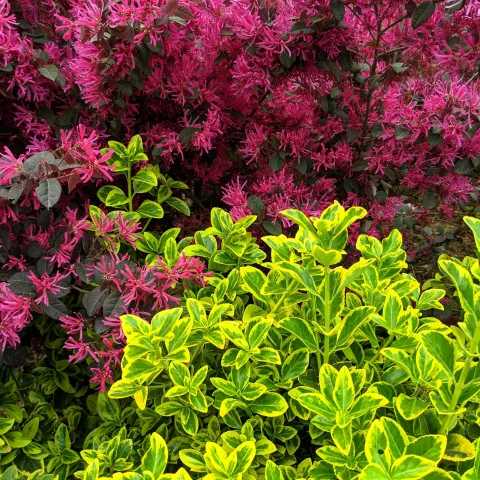
bright green plant in front of burgundy fringe flower shrub
Under the Solano Sun: Article

On "The Fringe" No Longer!

August 14, 2025
By Jennifer M Baumbach
Blog by Michelle KrespiAs part of my UC Master Gardeners training, I had the privilege of taking my first Horticulture class at Solano Community College, taught by a long-standing UC Master Gardener, Sandra Diehl. She has an encyclopedic knowledge of over six hundred plants that thrive in Solano County. In…
View Article
Strawberries and Caneberries: Article

Now You See It, Now You Don't. A Note about Fruit Ripening in Blackberry

August 14, 2025
By Mark P Bolda
A persistent question this time of year is why sometimes blackberry fruit are not ripening. They go through flower, green fruit and then to red, but once at that stage some (or many, I have even witnessed cases of all, really sad) stay red and simply refuse to ripen.As many readers of this blog know this is…
View Article
Primary Image
Praying mantis, Stagmomantis limbata, waiting for lunch. (Photo by Kathy Keatley Garvey)
Bug Squad: Article

Ms. Mantis Waiting for Lunch

August 13, 2025
By Kathy Keatley Garvey
  Bee and butterflies love the patch of Mexican sunflowers (Tithonia rotundifola) in our Vacaville garden.For several months now, they've been buzzing and fluttering around the six-to-eight-foot-high plants, sipping nectar and returning for more.  It's a serene place for pollinators except for…
View Article
Page

This is for Erin

This is a complete header 2This is a complete paragraph This is a complete paragraph This is a complete paragraph This is a complete paragraph This is a complete paragraph This is a complete paragraph This is a complete paragraph This is a complete paragraph This is a complete paragraphBenefitsFlexible…
View Page
UC Environmental Stewards: Event

California Naturalist Course with Effie Yeaw Nature Center

Event Date
Sep 15, 2025 - Nov 17, 2025

The Effie Yeaw Nature Center offers the California Naturalist certification class in Carmichael (Sacramento County). The 40-hour course combines a science curriculum with guest lecturers, field trips and project-based learning to explore the unique ecology and natural history of California, with an…
UC Environmental Stewards
View Event
UC Environmental Stewards: Event

California Naturalist Course with Cuesta College

Event Date
Sep 19, 2025 - Nov 7, 2025

Cuesta College’s California Naturalist course is composed of 8 Fridays, totaling 40 hours of instruction plus driving time and lunch breaks. Each Friday starts on campus with a classroom presentation, followed by a field trip. Field trips are by private vehicle (carpool) and include one mile of walking. The…
UC Environmental Stewards
View Event