A Natural Solution for California's Herds: African Catfish Peptides

California's cattle producers and agricultural communities are all too familiar with the rising challenge of antibiotic resistance, making common bacterial infections harder to treat in livestock. But imagine a future where we could tackle these infections with a natural, powerful alternative. Our research points to just that: antimicrobial peptides (AMPs) found in African catfish.

We're really excited about these peptides because African catfish thrive in pathogen-rich freshwater, naturally producing these robust immune compounds in their skin mucus as a defense. This natural origin makes them highly appealing alternatives to synthetic drugs.

Predicted Safety and Potent Action

One of the most compelling aspects of these AMPs is their predicted safety for mammals. Our initial computer analyses suggest that various catfish AMPs are generally recognized as safe (GRAS). We predict they'll be absorbed in the human intestine without causing liver, brain, or heart toxicity. Furthermore, lab tests on a promising peptide, NACAP-II, confirmed it was non-hemolytic, meaning it didn't damage rabbit red blood cells—a strong indicator of its potential safety for mammalian cells.

Beyond safety, these peptides demonstrate effectiveness against problematic bacteria. One study revealed NACAP-II's strong activity against Extended-Spectrum Beta-Lactamase (ESBL)-producing Escherichia coli—a critical concern for both animal and human health due to its resistance to many common antibiotics. Another peptide, ACAP-IV, also showed antibacterial activity against E. coli and Staphylococcus aureus. We believe these AMPs work by directly disrupting bacterial cell membranes, a mechanism that makes it harder for bacteria to develop resistance compared to how they resist traditional antibiotics.

Stanislaus County: Article

Evapotranspiration Report 08/07/2025

August 8, 2025
By Adrienne A Tompkins
Please find the attached document to provide the previous week’s estimated water use report in terms of evapotranspiration for almonds, peaches, walnuts, established vineyard, alfalfa, and pasture in Stanislaus County. This report may be used as a guide in your irrigation schedule for the…
View Article
Event Primary Image
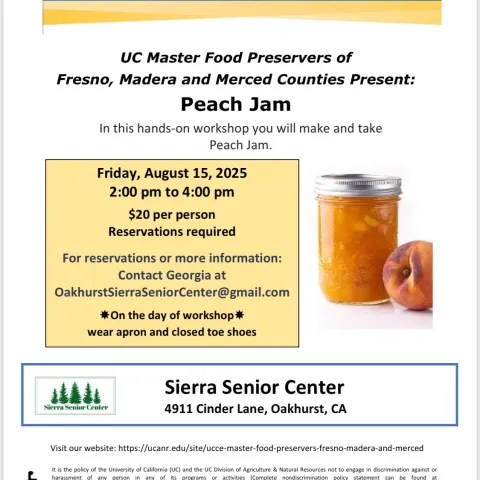
Peach Jam Workshop Flyer
UCCE Master Food Preservers of Fresno, Madera, and Merced: Event

Madera County Peach Jam Workshop - Oakhurst, CA

Event Date
Aug 15, 2025

Join us in making and canning peach jam in this hands on workshop. Pre registration is required. 
UCCE Master Food Preservers of Fresno, Madera, and Merced
View Event
Event Primary Image
Pressure canning workshop flyer
UCCE Master Food Preservers of Fresno, Madera, and Merced: Event

Merced Pressure Canning Workshop

Event Date
Aug 30, 2025

Merced pressure canning in-person workshop. Learn to safely pressure can meats and vegetables, and go home with your own jar of preserved food. Registration required. Supply fee: $15  
UCCE Master Food Preservers of Fresno, Madera, and Merced
View Event
Primary Image
Foto de nogaleras
Noticias: Article

Científicos de UC preguntan a los nogales: ¿Cuándo necesitan ser regados?

August 8, 2025
By Trina Kleist
Expertos crean un método más efectivo para determinar la necesidad de riego de los árboles El agua es el preciado elemento del que ningún cultivo puede prescindir. Pero en los últimos años, la escasez de este vital líquido en California ha impulsado a productores y científicos a encontrar métodos y…
View Article
Primary Image
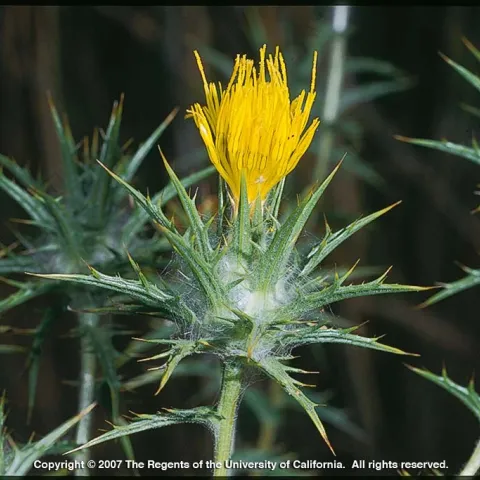
Distaff thistle flower head
On the Range: Article

Prevent Your Wooly Distaff Thistle and Purple Starthistle From Going to Seed!

August 8, 2025
By Devii R Rao
 Now is the time to do any last minute control of wooly distaff thistle and purple starthistle, before they go to seed. Most herbicide treatments for these species will not be effective during the summer, so your options are more limited.Weed Control in Natural Areas in the Western United States is a…
View Article
UC Ag Experts Talk Webinar Series: Page

Past webinars - Vertebrate pests

As webinars are completed, we post recordings on YouTube for future study and sharing with others. Continuing education units are not available for recorded webinars. Only participants of live webinars receive credits.Management of Voles, Rats, and Mice in Agricultural Fields by Dr. Roger Baldwin …
View Page
UC Ag Experts Talk Webinar Series: Page

Past webinars - Agronomic crop pests

As webinars are completed, we post recordings on YouTube for future study and sharing with others. Continuing education units are not available for recorded webinars. Only participants of live webinars receive credits.Pest Management in Alfalfa, Small Grains, and Garbanzo Beans by Dr. Michelle…
View Page
Primary Image
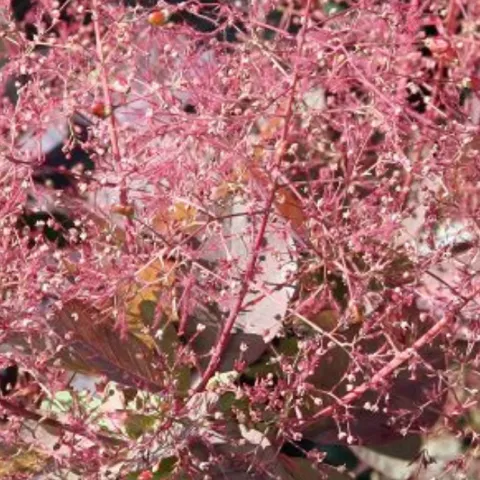
Smoke tree
Fresno Gardening Green: Article

This week in the garden: August 8 - 14

August 8, 2025
By Jeannette Warnert
Take a stroll through your garden with a morning cup of coffee or tea.TasksCollect ripened seeds of favorites and store for next year.Start planning for fall planting.  Select plants that are resistant to common diseases and insect pests…
View Article
UC Master Gardeners of Placer County: Page

2026 Gardening Guide and Calendar Preview

It's a Gardening Guide on a CalendarNow on sale!To Purchase: 2026 Gardening Guide and Calendar   A great gift for yourself, family or friends. The 2026 Calendar and Gardening Guide with the theme “Meet Me in the Garden,” is a celebration of connection – between people and plants, nature…
View Page
Primary Image
Chemical ecologist Jeff Aldrich

Impact of Life Work of Jeff Aldrich Continues to Unfold

August 7, 2025
By Kathy Keatley Garvey
 The impact of the life work of renowned chemical ecologist Jeff Aldrich (1949-2025) continues to unfold.Aldrich, a research entomologist at USDA-ARS from 1980 to 2011, who then worked with UC Davis  Department of Entomology and Nematology researchers for a decade, died June 28 at age 75 in Fort…
View Article