
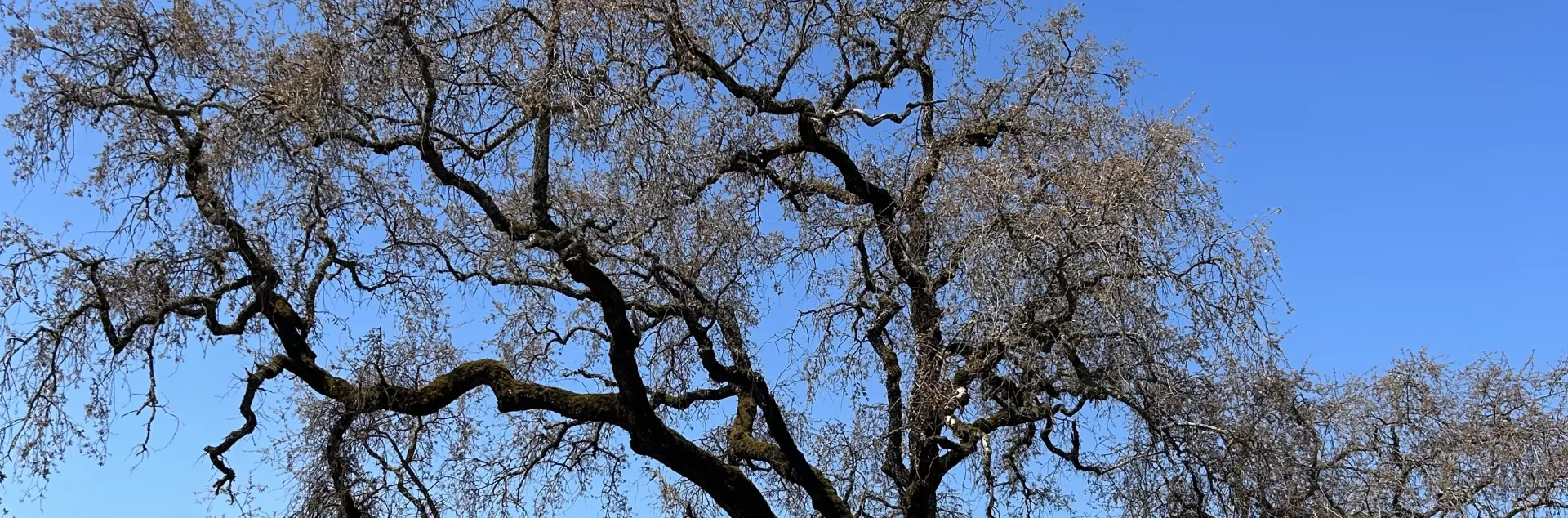
Blue Oak Woodland MortalityElevated levels of blue oak mortality have been reported in various parts of California over the past few years. Reported oak mortality tends to occur in a scattered or patchy pattern across the landscape. In some places, other species, such as valley oak have been affected. Concerned landowners have wondered whether another introduced pest or pathogen could be the source of this elevated mortality. |
Disease: Sudden Oak Death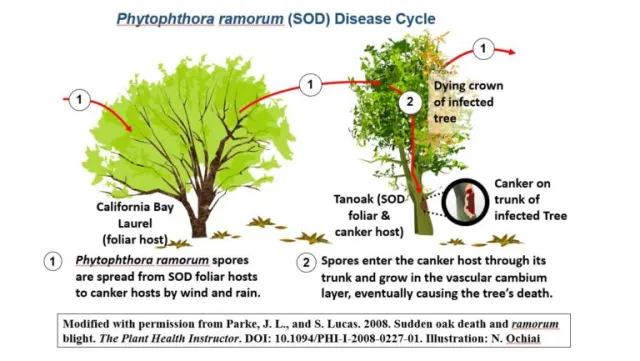 Sudden Oak Death, or SOD, was first observed in California in 1995. The disease is caused by an introduced pathogen called Phytophthora ramorum. Image 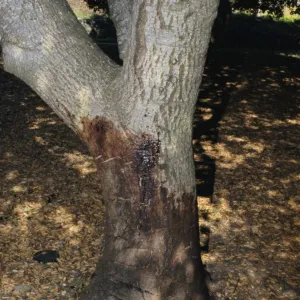 The California Oak Mortality Task Force (COMTF) is a multi-agency collaborative team focused on understanding this disease and educating the public about how to manage infected stands and curtail the spread of this damaging disease. |
Invasive Plants: Barbed GoatgrassImage 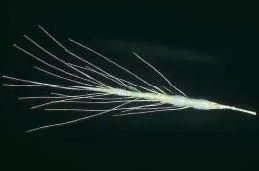 Barbed goatgrass (Aegilops triuncialis) is an introduced annual grass that is spreading throughout California grasslands. It is listed as a noxious weed by the California Department of Food and Agriculture and as a wildland weed by the California Exotic Pest Plant Council. When mature, it is unpalatable for livestock. In grasslands, Barbed goatgrass reduces the abundance of native perennial bunchgrasses and competes with more desirable introduced annuals, as well as native forbs. |
Conifer Encroachment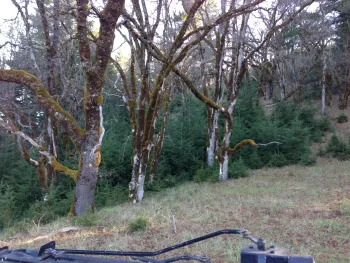 The loss of deciduous oak woodlands to native conifer encroachment is a major conservation concern in northwestern California and across much of the Pacific Northwest, resulting in associated losses of wildlife habitat, cultural uses, biodiversity, and other ecosystem services. These losses have drawn increasing attention in recent years, and oak woodland conservation and restoration efforts have gained momentum throughout the ranges of Oregon white oak (Quercus garryana) and California black oak (Quercus kelloggii), the two species most afflicted by encroachment. |
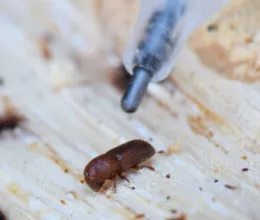
Invasive Insect: Goldspotted Oak Borer (GSOB)Image 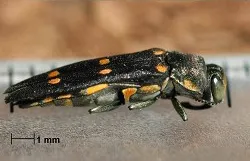 The Gold Spotted Oak Borer (GSOB) is an introduced insect that feeds on coast live oak (Quercus agrifolia) and California black oak (Quercus kelloggii). To date, it can be found in Southern California, in San Diego, Riverside, Orange, Los Angeles and San Bernardino Counties. It is believed that this non-native insect arrived in California during the last two decades, likely from firewood transported to the state from Arizona or Mexico where GSOB is known to live. The University is currently involved in a large educational effort to make the state’s residents understand the threat this insect poses and to advise them on how they can help contain this outbreak. One critical factor in containing the spead of GSOB is to NOT MOVE FIREWOOD from infested areas! Goldspotted Oak Borer website
|
Oaks and Climatic Factors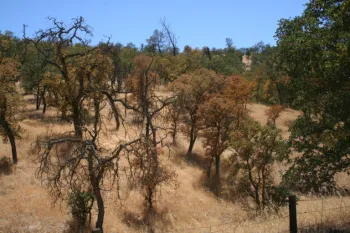 There are many articles in Oaks 'n Folks discussing the impact of climate on oak woodlands. |
Useful Forest Health Resources
California Oak Mortality Task Force California Forest Pest Council |
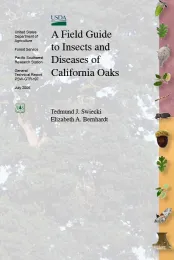 Thousands of species of microorganisms and invertebrates inhabit oak woodlands. This guide focuses on the relatively small number of these insects and diseases that are capable of causing damage to oak trees. Citation: Swiecki, Tedmund J. and Bernhardt, Elizabeth A. 2006. A field guide to insects and diseases of California oaks. Gen. Tech Rep. PSW-GTR-197. Albany, CA: Pacific Southwest Research Station, Forest Service, U.S. Department of Agriculture, 151 p. |