A Natural Solution for California's Herds: African Catfish Peptides

California's cattle producers and agricultural communities are all too familiar with the rising challenge of antibiotic resistance, making common bacterial infections harder to treat in livestock. But imagine a future where we could tackle these infections with a natural, powerful alternative. Our research points to just that: antimicrobial peptides (AMPs) found in African catfish.

We're really excited about these peptides because African catfish thrive in pathogen-rich freshwater, naturally producing these robust immune compounds in their skin mucus as a defense. This natural origin makes them highly appealing alternatives to synthetic drugs.

Predicted Safety and Potent Action

One of the most compelling aspects of these AMPs is their predicted safety for mammals. Our initial computer analyses suggest that various catfish AMPs are generally recognized as safe (GRAS). We predict they'll be absorbed in the human intestine without causing liver, brain, or heart toxicity. Furthermore, lab tests on a promising peptide, NACAP-II, confirmed it was non-hemolytic, meaning it didn't damage rabbit red blood cells—a strong indicator of its potential safety for mammalian cells.

Beyond safety, these peptides demonstrate effectiveness against problematic bacteria. One study revealed NACAP-II's strong activity against Extended-Spectrum Beta-Lactamase (ESBL)-producing Escherichia coli—a critical concern for both animal and human health due to its resistance to many common antibiotics. Another peptide, ACAP-IV, also showed antibacterial activity against E. coli and Staphylococcus aureus. We believe these AMPs work by directly disrupting bacterial cell membranes, a mechanism that makes it harder for bacteria to develop resistance compared to how they resist traditional antibiotics.
Primary Image
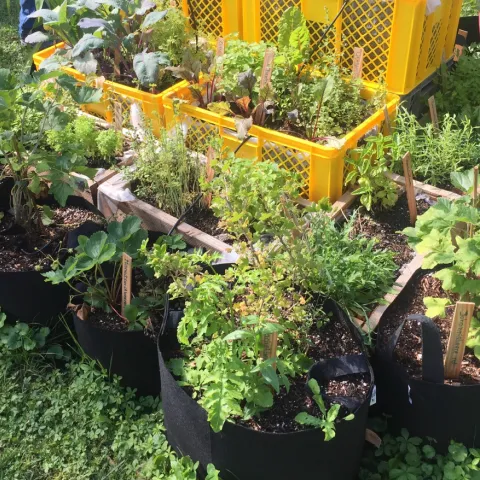
A combination of grow bags and other containers can be used to create a portable edible garden
UC Marin Master Gardeners: Article

June 2024: Growing Edibles in Containers

May 24, 2024
Maximizing the use of space to grow edibles is always a consideration in the Edible Demonstration Garden. Planting veggies in containers has proven to be an excellent way to expand the gardens growing capacity...
View Article
Primary Image
Sue picture 1
Fresno Gardening Green: Article

African violets have babies!

May 24, 2024
I couldn't figure out why my African violets were losing their beautiful rosette shape. I kept snipping leaves in an attempt to restore the shape, but the leaves on my plants were getting more crowded. Then I learned that, as an African violet matures, it produces baby plants or pups.
View Article
Primary Image
Reduce conditions favorable to spider mites by providing adequate water for your plants and reducing dust on and around the leaves. (Photo: UC IPM)
Fresno Gardening Green: Article

This week in the garden: May 24 - 30

May 24, 2024
I try to rely less and less on controlling nature. Instead I am learning to live with its chaos. ~ Mas Masumoto Tasks Monitor fruiting pear and apple trees for codling moth. To control powdery mildew on grapevines, apply sulfur every 14 days until fruit begins to taste sweet.
View Article
Primary Image
This pink-flowering Deutzia is a standout in a shady woodland garden. J.C. Lawrence
The Real Dirt: Article

Shrubs for Shady Spots in the Garden

May 24, 2024
Summers are getting hotter in much of the U.S., including our local environment. One way to counteract this change in climate is by planting trees to provide more shade in the summer months. But adjusting to a shadier garden also means shifting to different plant choices.
View Article
Primary Image
snakefly
Topics in Subtropics: Article

Snakeflies

May 23, 2024
By Ben A Faber
Watch out ACP, Persea Mite, Avocado Thrips. Here comes Snake Fly. Not a snake. And not a fly. But a snakefly. It's always fun to be reminded that there are lots of different predators out there, and this one is one of the more voracious.
View Article
The Savvy Sage: Article

Chicken’s and Gardening

May 23, 2024
Let's chat about something a bit funky but oh-so-amazing for our gardens: chicken poop. It's jam-packed with all the good stuff plants love nitrogen, phosphorus, potassium you name it. Your veggies and flowers will be slurping up those nutrients like they've hit the jackpot at the salad bar.
View Article
Primary Image
photos by Heather Hamilton
Under the Solano Sun: Article

Protea

May 23, 2024
Protea is a species of flowering plants from South Africa. It is a member of the Leucadendron family, also commonly known as the sugarbush. Interestingly enough, it belongs to an ancient angiosperm, which evidence from pollen fossils that date back to 80 million years ago.
View Article