A Natural Solution for California's Herds: African Catfish Peptides

California's cattle producers and agricultural communities are all too familiar with the rising challenge of antibiotic resistance, making common bacterial infections harder to treat in livestock. But imagine a future where we could tackle these infections with a natural, powerful alternative. Our research points to just that: antimicrobial peptides (AMPs) found in African catfish.

We're really excited about these peptides because African catfish thrive in pathogen-rich freshwater, naturally producing these robust immune compounds in their skin mucus as a defense. This natural origin makes them highly appealing alternatives to synthetic drugs.

Predicted Safety and Potent Action

One of the most compelling aspects of these AMPs is their predicted safety for mammals. Our initial computer analyses suggest that various catfish AMPs are generally recognized as safe (GRAS). We predict they'll be absorbed in the human intestine without causing liver, brain, or heart toxicity. Furthermore, lab tests on a promising peptide, NACAP-II, confirmed it was non-hemolytic, meaning it didn't damage rabbit red blood cells—a strong indicator of its potential safety for mammalian cells.

Beyond safety, these peptides demonstrate effectiveness against problematic bacteria. One study revealed NACAP-II's strong activity against Extended-Spectrum Beta-Lactamase (ESBL)-producing Escherichia coli—a critical concern for both animal and human health due to its resistance to many common antibiotics. Another peptide, ACAP-IV, also showed antibacterial activity against E. coli and Staphylococcus aureus. We believe these AMPs work by directly disrupting bacterial cell membranes, a mechanism that makes it harder for bacteria to develop resistance compared to how they resist traditional antibiotics.

Tulare County Cooperative Extension: Article

Calf Disbudding Workshop

May 23, 2024
You are invited to attend the Disbudding workshop where we will discuss calf disbudding practices, and understand anatomy for an effective disbudding. The workshop will be offered in English and Spanish and will take place on June 11th from 12-1:30 at the UC Davis -VTMTRC in Tulare.
View Article
San Joaquin 4-H News: Article

2023-2024 4-H Program Year End

May 23, 2024
By Angela Tipsey
The 2023-2024 Youth Development Program year ends on June 30, 2024. At the end of each program year, the online enrollment system resets and all enrollments rollover into an "inactive" state. The ZSuite enrollment system will begin this process on June 21, 2024.
View Article
Livestock & Range: Article

Livestock Pass Fire Safety Meeting

May 22, 2024
By Devii R Rao
Do you have livestock in San Benito County? If so, you'll want to attend the livestock pass fire training which will be hosted by the Ag Commissioner's office and presented by CAL FIRE.
View Article
Primary Image
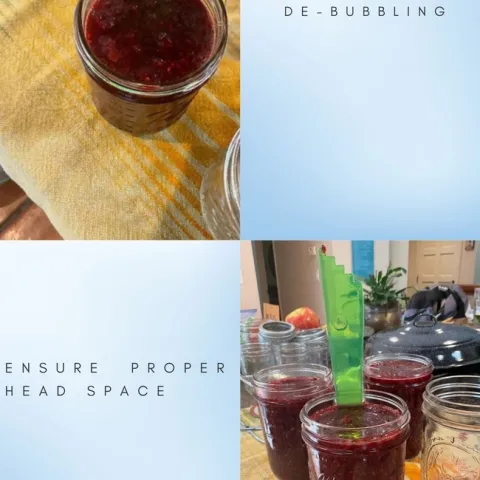
Filled jam jars with de-bubber tool inserted.
Master Food Preserver SLO/SB Counties: Article

Simple Strawberry Rhubarb Jam

May 22, 2024
By Maria Murrietta
Spring has sprung and not only are the birds and bees stirring, but humans on the Central Coast are out and about after a much-needed rainy winter season. There are parties, garden workdays and spring cleaning to attend to.
View Article
Primary Image
UC Davis distinguished professor Bruce Hammock is a 2024 recipient of a Graduate Studies Distinguished Graduate and Postdoctoral Mentoring Award. (Photo by Kathy Keatley Garvey)
Bug Squad: Article

UC Davis Distinguished Professor Bruce Hammock: Mentor Extraordinaire

May 22, 2024
By Kathy Keatley Garvey
Graduate students and postdoctoral fellows who are alumni of the laboratory of UC Davis distinguished professor Bruce Hammock--they all praise him for his excellent mentoring, his love of science, and his caring personality. If you're a member of the Hammock lab, you're family.
View Article
Primary Image
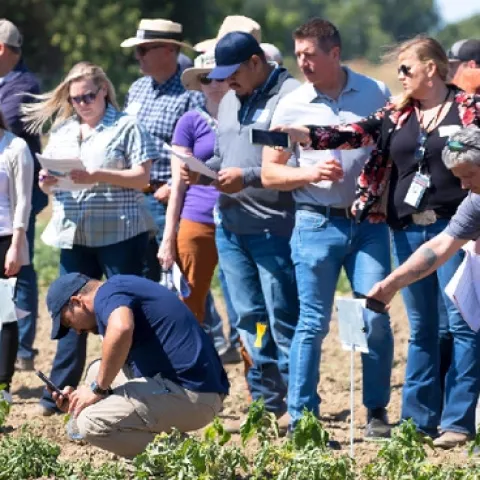
Attendees at Weed Day 2023
UC Weed Science (weed control, management, ecology, and minutia): Article

EVENTS :: Register now!

May 22, 2024
By Gale Perez
Register before the cost goes up Weed Day 2024 :: click link below https://wric.ucdavis.edu/events/weed_day_2024.html Last day to get to early-bird cost is May 24, 2024. Register now! * * * * * * * * More events...
View Article
UCCE in Santa Barbara County: Article

Interested in Becoming a Master Gardener?

May 22, 2024
Follow the link below for information. Training Class 2025 Overview Course overview: 18-week course Approximately 70-hour commitment Proposed start: January 11, 2025 Proposed end: May 31, 2025 In-person sessions about three times per month on Saturdays, typically 9am Noon.
View Article
UCCE in Santa Barbara County: Article

June Online Garden Talk

May 22, 2024
Join Master Gardeners Janet Rogers and Trudy Adair-Verbais As they present a research-based information on Home Composting.
View Article