A Natural Solution for California's Herds: African Catfish Peptides

California's cattle producers and agricultural communities are all too familiar with the rising challenge of antibiotic resistance, making common bacterial infections harder to treat in livestock. But imagine a future where we could tackle these infections with a natural, powerful alternative. Our research points to just that: antimicrobial peptides (AMPs) found in African catfish.

We're really excited about these peptides because African catfish thrive in pathogen-rich freshwater, naturally producing these robust immune compounds in their skin mucus as a defense. This natural origin makes them highly appealing alternatives to synthetic drugs.

Predicted Safety and Potent Action

One of the most compelling aspects of these AMPs is their predicted safety for mammals. Our initial computer analyses suggest that various catfish AMPs are generally recognized as safe (GRAS). We predict they'll be absorbed in the human intestine without causing liver, brain, or heart toxicity. Furthermore, lab tests on a promising peptide, NACAP-II, confirmed it was non-hemolytic, meaning it didn't damage rabbit red blood cells—a strong indicator of its potential safety for mammalian cells.

Beyond safety, these peptides demonstrate effectiveness against problematic bacteria. One study revealed NACAP-II's strong activity against Extended-Spectrum Beta-Lactamase (ESBL)-producing Escherichia coli—a critical concern for both animal and human health due to its resistance to many common antibiotics. Another peptide, ACAP-IV, also showed antibacterial activity against E. coli and Staphylococcus aureus. We believe these AMPs work by directly disrupting bacterial cell membranes, a mechanism that makes it harder for bacteria to develop resistance compared to how they resist traditional antibiotics.
UC Master Gardener Program of Sonoma County: Page

Ceratostigma (Plumbago or Leadwort)

Commonly called plumbago or leadwort, three of the common Ceratostigma species are evergreen shrubs; the fourth is a groundcover. They are among the few blue summer-flowering shrubs completely adaptable to Sonoma Countys Mediterranean climate.
View Page
UC Master Gardener Program of Sonoma County: Page

Lagerstroemia (Crape Myrtle)

Crape myrtles are shrubs and small trees indigenous to temperate and tropical regions from Asia to Australia. The myrtle in their name is a nod to the similarity of their leaf shape of a true myrtle (Myrtus).
View Page
Primary Image
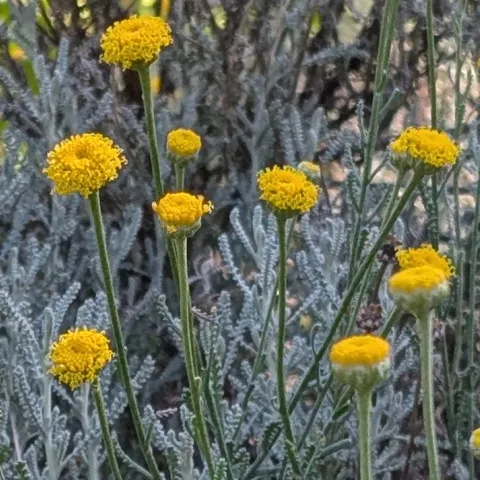
Santolina grows well in Sonoma County
UC Master Gardener Program of Sonoma County: Page

Santolina (Lavender Cotton)

Santolina chamaecyparissus from the Mediterranean Basin is commonly called lavender cotton, a confusing name with no connection to either lavender or cotton. The Latin derivation translates to holy flax in English, but that, too, is obscure.
View Page
Primary Image
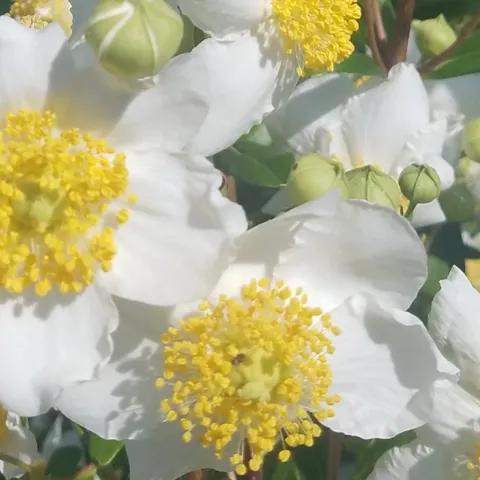
Carpenteria rare California native bush anemone
UC Master Gardener Program of Sonoma County: Page

Carpenteria californica (Bush Anemone)

Carpenteria californica, or bush anemone, is one of Californias loveliest, but rarest, native shrubs. It grows only on dry granite ridges of southern Sierra Nevada foothills in the Central Valley near Fresno, and is the only species in its genus.
View Page
UC Master Gardener Program of Sonoma County: Page

Euphorbia (Spurges)

Euphorbia is a very large genus with over 2,000 species, part of the Euphorbiaceae family whose members include surprising shapes and sizes. They can be annuals, perennials, evergreen or deciduous, even shrubs or trees.
View Page
UC Master Gardener Program of Sonoma County: Page

Cercis occidentalis (Western Redbud)

Grown as either a large shrub or a small, multi-trunked tree, a blooming western redbud is one of the most dramatic of California natives. Although spring blossoms are the most standout feature of the western redbud, its foliage and overall aspect are equally welcoming.
View Page
UC Master Gardener Program of Sonoma County: Page

Muhlenbergia rigens (Deer Grass)

This native California grass is commonly called deer grass, although deer generally avoid it. In California, it ranges from Shasta County to the Mexican border. It is also found in Texas, New Mexico, and Mexico usually below 7000 ft.
View Page
Primary Image
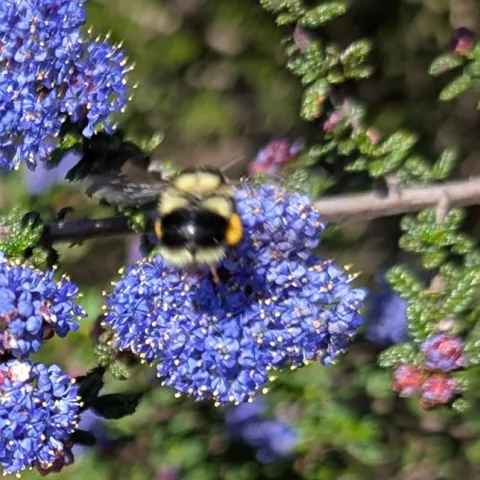
Ceanothus Wild Lilac attracts pollinators and California native bees
UC Master Gardener Program of Sonoma County: Page

Ceanothus (Wild Lilac)

Ceanothus is a large genus of diverse, versatile and beautiful North American species in the buckthorn family, Rhamnaceae. Many are native to California, some endemic to Sonoma County. The genus includes over 60 shrubs, prostrate or mounding, often from 1-6 ft. high, although native C.
View Page
UC Master Gardener Program of Sonoma County: Page

Baccharis pilularis (Coyote Brush)

Known as chaparral broom, or more commonly coyote brush, Baccharis pilularis is part of the sunflower family (Asteraceae), even though it looks nothing like a sunflower.
View Page
UC Master Gardener Program of Sonoma County: Page

Garrya elliptica (Silktassel)

Garrya elliptica, commonly called silktassel or coast tassel bush, is prized for its catkinslong, pendent flowersthat cascade from branch tips among dense, green leaves in winter when little else is in bloom. This substantial, long-lived, shrub is also attractive when not in flower.
View Page