A Natural Solution for California's Herds: African Catfish Peptides

California's cattle producers and agricultural communities are all too familiar with the rising challenge of antibiotic resistance, making common bacterial infections harder to treat in livestock. But imagine a future where we could tackle these infections with a natural, powerful alternative. Our research points to just that: antimicrobial peptides (AMPs) found in African catfish.

We're really excited about these peptides because African catfish thrive in pathogen-rich freshwater, naturally producing these robust immune compounds in their skin mucus as a defense. This natural origin makes them highly appealing alternatives to synthetic drugs.

Predicted Safety and Potent Action

One of the most compelling aspects of these AMPs is their predicted safety for mammals. Our initial computer analyses suggest that various catfish AMPs are generally recognized as safe (GRAS). We predict they'll be absorbed in the human intestine without causing liver, brain, or heart toxicity. Furthermore, lab tests on a promising peptide, NACAP-II, confirmed it was non-hemolytic, meaning it didn't damage rabbit red blood cells—a strong indicator of its potential safety for mammalian cells.

Beyond safety, these peptides demonstrate effectiveness against problematic bacteria. One study revealed NACAP-II's strong activity against Extended-Spectrum Beta-Lactamase (ESBL)-producing Escherichia coli—a critical concern for both animal and human health due to its resistance to many common antibiotics. Another peptide, ACAP-IV, also showed antibacterial activity against E. coli and Staphylococcus aureus. We believe these AMPs work by directly disrupting bacterial cell membranes, a mechanism that makes it harder for bacteria to develop resistance compared to how they resist traditional antibiotics.

Primary Image
The Intermountain Research and Extension Center 2023 mint breeding block. Photo by Darrin Culp
ANR Employee News: Article

Intermountain REC research proposals due March 21

January 29, 2025
By Pamela S Kan-Rice
The Intermountain Research and Extension Center is soliciting proposals from researchers for new and continuing research projects in 2025-26. IREC is a 140-acre research facility located at 4,000 feet elevation near the Oregon border.
View Article
Primary Image
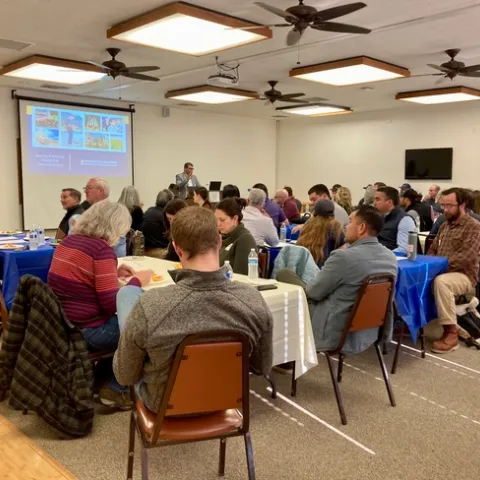
Swelam looks out to dozens of people seated at tables at West Side REC.
ANR Employee News: Article

UC ANR leaders meet with growers at Kearney, West Side RECs

January 29, 2025
By Pamela S Kan-Rice
Growers and other San Joaquin Valley residents were invited to meet with UC ANR leadership and learn about the latest research at Kearney Agricultural Research and Extension Center in Parlier and West Side REC in Five Points on Jan. 9.
View Article
Primary Image
bee hotel
Topics in Subtropics: Article

Creating Native Bee Nests

January 29, 2025
By Ben A Faber
Checking in at bee hotels: trap-nesting occupancy and fitness of cavity-nesting bees in an urbanised biodiversity hotspot Kit S. Prendergast The design of bee hotels is critical - untreated wood, holes a range of diameters (I suggest 3-10 mm), lengths min 10 cm.
View Article
Article

Message about federal funding freeze

January 28, 2025
By Pamela S Kan-Rice
Dear Colleagues: Recent announcements from the Office of the President of the United States regarding the temporary pause on federal grants, loans and other financial assistance programs that was to become effective at 2 p.m.
View Article
Primary Image
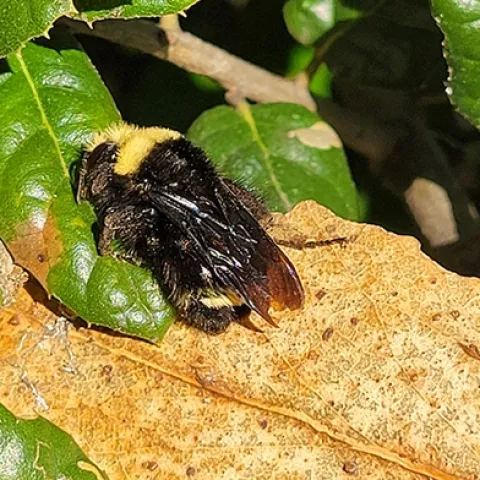
The yellow-faced bumble bee, Bombus vosnesenzkii, on an oak leaf at the Glen Cove Waterfront Park, as photographed on Jan. 11 by Michael Kwong.
Bug Squad: Article

Winning Bumble at the Glen Cove Waterfront Park

January 28, 2025
By Kathy Keatley Garvey
What are the odds? You're participating in a monarch-counting expedition, you photograph an image of a bumble bee with your cell phone, and you win a regional bumble bee contest, a contest you didn't know about at the time.
View Article