A Natural Solution for California's Herds: African Catfish Peptides

California's cattle producers and agricultural communities are all too familiar with the rising challenge of antibiotic resistance, making common bacterial infections harder to treat in livestock. But imagine a future where we could tackle these infections with a natural, powerful alternative. Our research points to just that: antimicrobial peptides (AMPs) found in African catfish.

We're really excited about these peptides because African catfish thrive in pathogen-rich freshwater, naturally producing these robust immune compounds in their skin mucus as a defense. This natural origin makes them highly appealing alternatives to synthetic drugs.

Predicted Safety and Potent Action

One of the most compelling aspects of these AMPs is their predicted safety for mammals. Our initial computer analyses suggest that various catfish AMPs are generally recognized as safe (GRAS). We predict they'll be absorbed in the human intestine without causing liver, brain, or heart toxicity. Furthermore, lab tests on a promising peptide, NACAP-II, confirmed it was non-hemolytic, meaning it didn't damage rabbit red blood cells—a strong indicator of its potential safety for mammalian cells.

Beyond safety, these peptides demonstrate effectiveness against problematic bacteria. One study revealed NACAP-II's strong activity against Extended-Spectrum Beta-Lactamase (ESBL)-producing Escherichia coli—a critical concern for both animal and human health due to its resistance to many common antibiotics. Another peptide, ACAP-IV, also showed antibacterial activity against E. coli and Staphylococcus aureus. We believe these AMPs work by directly disrupting bacterial cell membranes, a mechanism that makes it harder for bacteria to develop resistance compared to how they resist traditional antibiotics.

Primary Image
Giving Tuesday
ANR Employee News: Article

Get ready, Giving Tuesday is Nov. 28

October 30, 2023
By Pamela S Kan-Rice
Giving Tuesday is Nov. 28. Giving Tuesday, a global generosity movement, unleashing the power of people and organizations to transform their communities, is held annually on the Tuesday after Thanksgiving.
View Article
ANR Employee News: Article

Sign up for a Strategic Visioning feedback session

October 30, 2023
By Pamela S Kan-Rice
Join the UC ANR 2040 Strategic Visioning Committee either in-person or over Zoom to provide feedback on the initial draft of UC ANR's 2040 Strategic Vision and to network with colleagues.
View Article
Primary Image
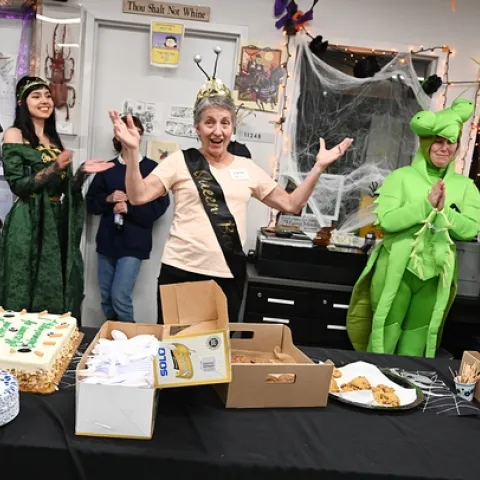
Lynn Kimsey (center) director of the Bohart Museum of Entomology, welcomes the crowd. In back are post-doctoral researcher Severyn Korneyev, and his wife, artist Kristina Kernytska; Tabatha Yang, Bohart education and outreach coordinator; and Jason Bond, professor and Schlinger chair in Insect Systematics and associate dean, College of Agricultural and Environmental Sciences. (Photo by Kathy Keatley Garvey)

Predators and Prey Help Bohart Museum Celebrate Halloween

October 30, 2023
By Kathy Keatley Garvey
What exactly happened when two predators and their prey--a praying mantis, a green darner dragonfly, a queen bee and a monarch butterfly--recently entered the Bohart Museum of Entomology with assorted entomologists? They all socialized and enjoyed a buffet dinner, followed by a cake.
View Article
Primary Image
Three women sit holding credit card scanners that look like cell phones.
ANR Employee News: Article

UC ANR accepts credit card payments

October 30, 2023
By Pamela S Kan-Rice
The UC ANR Business Operations Center has begun loaning credit card machines on a short-term basis for payment card acceptance during sales and events.
View Article
UC Cooperative Extension Imperial County: Article

34th Annual Fall Desert Crops Workshop Agenda - UPDATED

October 30, 2023
The previous meeting notice agenda for the Fall Desert Crops workshop was the wrong format to be able to register. Please use this one as you can click the link to register. Thank you. We apologize if anyone has been trying to contact us via telephone.
View Article