A Natural Solution for California's Herds: African Catfish Peptides

California's cattle producers and agricultural communities are all too familiar with the rising challenge of antibiotic resistance, making common bacterial infections harder to treat in livestock. But imagine a future where we could tackle these infections with a natural, powerful alternative. Our research points to just that: antimicrobial peptides (AMPs) found in African catfish.

We're really excited about these peptides because African catfish thrive in pathogen-rich freshwater, naturally producing these robust immune compounds in their skin mucus as a defense. This natural origin makes them highly appealing alternatives to synthetic drugs.

Predicted Safety and Potent Action

One of the most compelling aspects of these AMPs is their predicted safety for mammals. Our initial computer analyses suggest that various catfish AMPs are generally recognized as safe (GRAS). We predict they'll be absorbed in the human intestine without causing liver, brain, or heart toxicity. Furthermore, lab tests on a promising peptide, NACAP-II, confirmed it was non-hemolytic, meaning it didn't damage rabbit red blood cells—a strong indicator of its potential safety for mammalian cells.

Beyond safety, these peptides demonstrate effectiveness against problematic bacteria. One study revealed NACAP-II's strong activity against Extended-Spectrum Beta-Lactamase (ESBL)-producing Escherichia coli—a critical concern for both animal and human health due to its resistance to many common antibiotics. Another peptide, ACAP-IV, also showed antibacterial activity against E. coli and Staphylococcus aureus. We believe these AMPs work by directly disrupting bacterial cell membranes, a mechanism that makes it harder for bacteria to develop resistance compared to how they resist traditional antibiotics.

Primary Image
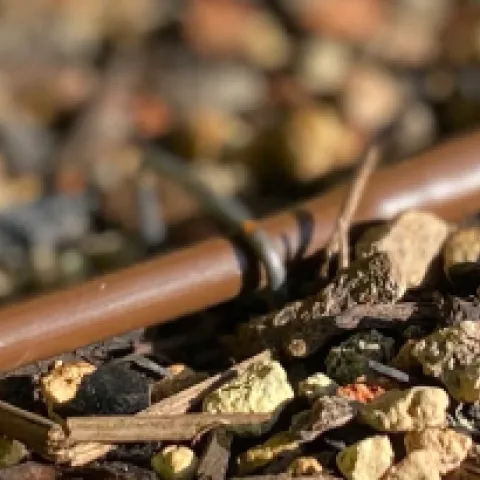
Drip irrigation for healthy plants
UC Marin Master Gardeners: Document

June: Water Wise Strategies

 As spring transitions into the dryer months of summer, now is the time to check and refine your irrigation system to keep your plants appropriately hydrated. Having healthy and hydrated plants is an important component of a Fire-smart Landscape. Healthy and hydrated plants:Are more difficult to…
View Document
Primary Image
irrigation tubing
UC Marin Master Gardeners: Document

July: Water Wise Strategies

 Maintaining healthy plants through the summer is a fire-smart strategy.  Well-hydrated plants have been found to be more resistant to embers and ignitions.  Use these important fire-smart & water-wise landscaping strategies:Help your soil maintain moisture by using compost and appropriate…
View Document
Primary Image
Gutter with leaves
UC Marin Master Gardeners: Document

August: Maintaining a Fire-Smart Zone 0

 As we get deeper into fire season, now is a good time to assess your landscape for immediate fire risk and take action. When evaluating fire risk, think lean, clean, and green, and start at the house and work out. With these principles in mind, we’ll focus on Zone 0, the first 5 feet surrounding…
View Document
Primary Image
onions cured and in storage
UC Marin Master Gardeners: Document

Onions

Onions, Allium cepa. There are two types of onions: strong-flavored that store well and mild and sweet that don’t last long in storage. There are yellow, white, and red varieties in both categories. Divided into long day, intermediate day, and short day varieties, determined by latitude. Intermediate and…
View Document
Primary Image
Daisies w Deadheads
UC Marin Master Gardeners: Document

September: Maintaining a Fire-Smart Zone 1

 After cleaning Zone 0 (0-5 feet from home) of any combustible materials (see August’s Fire-Smart tips), this month we’ll focus on applying the Fire-Smart Landscaping principles of “think lean, clean, and green”, and “start at the house and work out” to Zone 1 (5-30 feet from home). A Clean Zone…
View Document
Primary Image
fires smart landscape
UC Marin Master Gardeners: Document

October: Fire-Smart Plant Considerations

 There are no fire-resistant plants since all plants can burn. But there are aspects to consider when selecting plants to include in your fire-smart landscape. Plant spacing, size, and maintenance are important considerations.Consider:Plants that have a higher moisture content, lower resin or sap…
View Document
Primary Image
December fire zones
UC Marin Master Gardeners: Document

November: Plant Spacing in a Fire-Smart Landscape

 When considering plant spacing, you need to be mindful of how close the plants are to structures, the mature size of the plants, the steepness of slopes, and the vertical and horizontal spacing of plants. Horizontal spacing:It is ideal to remove all plants within 5 feet of structures.Plant density…
View Document
Primary Image
Zone Zero garden landscape
UC Marin Master Gardeners: Document

December: Assessing & Planning Zone 0

 As we enter the winter months, now is a great time to assess your landscape and plan for any adjustments you want to make to help protect your home from fire.Zone 0 is the area within 5 feet of your home and any attached structures such as a deck.  The objective of Zone 0 is to create a fire…
View Document
Primary Image
peas-snowpeas
UC Marin Master Gardeners: Document

Peas

Peas, Pisum sativum, are a cool season annual legume. Vining cultivar. Originated in southwestern Asia. Includes shelling, snow, and snap peas. Snow and snap peas are among the highest value crops you can grow (highest yield per square foot). Bush and pole varieties available. Pole peas produce up to five…
View Document
Primary Image
pepper varieties
UC Marin Master Gardeners: Document

Peppers

Peppers, Capsicum annum, consist of many varieties, including sweet (bell, banana) and spicy (Anaheim, cayenne, jalapeño, serrano). Chile peppers are smaller, longer, thinner, and more tapered than sweet peppers. Peppers are native perennials in Central and South America but they are grown as annuals here…
View Document