Apricot tree
mg-logo
UC Marin Master Gardeners

Fruit Trees

Growing Fruit Trees

Image
Tom Swinnen, Pexels
Tom Swinnen, Pexels

Fruit trees need suitable climates, well-drained soil, proper planting, and maintenance throughout the season. It takes some planning and work to get them established, but once you do it's a joy to pick fruit fresh from the garden. Here's how to create your very own home orchard. 

Site considerations

There are many things to consider when deciding which fruit trees are a good match for your garden, including:
• Careful evaluation of your microclimate
• Chill hours available (see below)
• Soil quality
• Access to water
• Space
• Protecting fruit from wildlife

Choosing a fruit tree
Select fruits you and your family enjoy for years of satisfying harvests. Courtesy UC Regents

The best way to assure success is to choose fruit trees that work in your microclimate, and to grow them in the conditions they need. One important consideration is the number of chill hours required. Fruit trees (except citrus) need a specific number of cumulative hours of chilling (temperatures between 32°F and 45°F) to break winter dormancy. This varies by variety. 
 

Preparation and planting

All edible plants require proper preparation and planting, and fruit trees are no exception. Fruit trees need proper spacing to avoid crowding and other problems. To get them off to a good start, make sure you follow guidelines for proper planting and handling. 
 

Growing instructions

Cick on the individual trees below to learn how to grow healthy trees for sweet, delicious fruit for years to come. 

> Apple
> Apricot
> Cherry
> Citrus
> Fig
> Olive
> Peach
> Pear
> Persimmon
> Plum

Pruning instructions

Pruning is different for every type of fruit tree. Most fruit trees benefit from summer and winter pruning. Refer to our full Pruning Library or click on the individual trees below for detailed tips, techniques, and timing.  

Benefits of pruning fruit trees 
• Controls size for easier harvesting and care 
• Increases strength so weight of the fruit doesn't break branches.
• Distributes sunlight evenly throughout tree 
• Regulates fruit bearing by removing excess fruitwood
• Renews fruitwood to continue strong buds and flowers
• Removes undesirable wood such as dead, broken, diseased, and crossing branches.

> HOW TO PRUNE COMMON FRUIT TREES

Maintenance

Use this maintenance schedule, which provides fruit tree care by type of tree and time of year. 


Irrigation 
Irrigation tubing

Generally speaking, fruit trees need a large volume of water -- but not every day. The correct amount of water for a given fruit tree depends primarily on the size of the tree and the heat of the day. Here's detailed irrigation advice and guidelines, including examples of how long to water using different watering methods such as drip or sprinklers.  


Pollination
Bees are an important pollinator for fruit trees. Janosch Diggelman, Unsplash

Without pollination, flowers may bloom abundantly but will not bear fruit. To avoid this frustration, learn your fruit tree's pollination requirement. This will vary depending on your tree, climate, and regional conditions. 


Fertilizing

Specialized fruit tree fertilizers can be purchased at nurseries. Be sure to follow all instructions. Do not add more fertilizer to help your tree “grow faster.” Excess fertilizer could damage your tree or get washed away in storm drains. 


Fruit thinning
Plums are a delicious summertime treat. Jen Theodore, Unsplash

Fruit trees often produce more fruit than the branches can hold when young, and more fruit than the tree can support as it matures. Thinning fruit or removing extra fruit when the fruit is small is key to harvesting good-sized fruit. The amount of fruit to thin depends on the species and the overall fruit load on the tree. 

Stone fruits produce one fruit per bud:
• Apricots and plums are fairly small, so they should be thinned to 2 to 4 inches apart on the branch.
• Peaches and nectarines should be thinned to about 3 to 5 inches.
• If excessive fruit have been set, more thinning may be required.
• If the fruit load is light, but one or two branches have a large amount of fruit, less thinning is required.

Pome fruits (apples and pears) produce a cluster of flowers and fruit from each bud:
• Thin to no more than one to two fruit per cluster, depending on the total fruit set and growing conditions. 
• Retain the largest fruit whenever possible. 
• When the crop is heavy, fruit should be spaced no less than 6 to 8 inches apart.


Propagation

If you eat a delicious peach and decide to plant the seed, you will be disappointed. Fruit trees require propagation by budding and grafting, which assures quality fruit plus disease resistance and other traits. Budded and grafted fruit trees are available bareroot in winter. 


Pests and Diseases

Integrated Pest Management (IPM) encourages natural predators to control pests in your garden or orchard. Nature provides a balance between plant pests and the beneficial insects that control these pests. The less we do to tamper with that balance, the more likely it is to work successfully. How does it differ from organic gardening? Proponents of IPM are not opposed to the use of chemical controls, but use them only when necessary and only in amounts and with proper timing to minimize a negative effect on the beneficial bugs in the garden. 

Learn more about common pests and diseases of individual fruit trees


Harvest and storage

Ripening, harvesting, and storage requirements vary by the type of fruit. Taste and texture will be at their best if you use proper strategies. Here are guidelines for storage
 

FRUIT TREE CARE CARDS TO PRINT & KEEP!

Use Master Gardener and master pruner Susan Pearson's pruning and growing cards for specific fruit trees common in Marin. Print them out and keep them for easy reference.

Image
Pruning-Card-APPLE

APPLE 
FIG 
LEMON 
PEACH 
PEAR 
PERSIMMON 
PLUM 
POMEGRANATE

BACK TO EDIBLES
> What Edible Gardens Need
> Best Choices for Marin
> How to Prepare
> How to Plant
> Edibles in Containers
> Planting Calendar
> Grow & Care Sheets for Vegetables, Herbs & Fruits
> Tips & Techniques
> How to Maintain
> Fruit Trees
> Top 20 Edible Garden Problems
> Cover Crops & Soil Enhancements in the Off-season
> Conserving Water

•••••••••

Visit our EDIBLE DEMO GARDEN at IVC Organic Farm & Garden
 

Primary Image
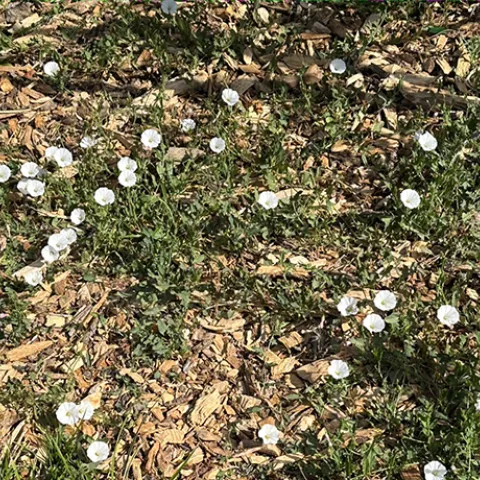
Field bindweed is a perennial garden weed also known as wild morning glory
UC Marin Master Gardeners: Article

September 2024: Tackling the Weeds

August 24, 2024
No matter what season, there is always weeding to be done in the Edible Demo Garden. Weeds seem to pop up everywhere...
View Article

July 2024: Fruit Tree Maintenance

Primary Image
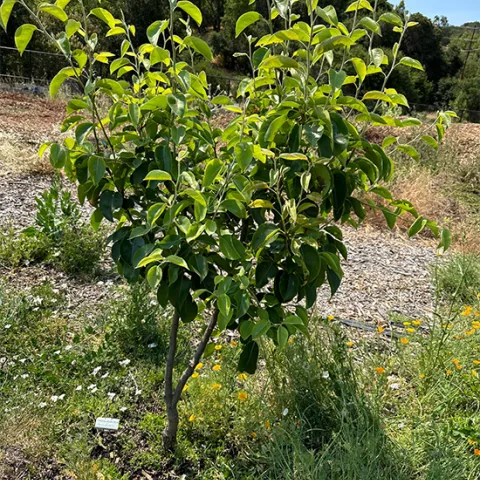
This Asian pear tree has been pruned for optimum size and shape.
Body

fruit tree 1
Two years ago, volunteers planted six bare-root fruit trees in the Edible Demo Garden. Although some did not survive and were replaced, there is now a row of small fruit trees that are beginning to produce. The trees in this little orchard do not demand as much attention as the annual edible crops, but they have their own seasonal care requirements.  In addition to regular irrigation and fertilization, fruit trees need pruning, fruit thinning, and disease management.


Why prune fruit trees?

All fruit trees require pruning for optimum vigor and fruit production. Pruning is also a way to control tree size, making care and harvesting easier. The first pruning of the fruit trees in the Edible Demo Garden was done at the time of planting. Following recommendations for keeping the trees small, a hard heading cut was made on the new bare root trees to remove approximately two-thirds of the main trunk to about knee height. In the following years, both winter and summer pruning have helped to shape the trees and maintain their health. Pruning in the winter when a tree is dormant helps to invigorate it and encourage new growth. Summer pruning is done to remove excess growth and control the dimensions and shape of the tree. Ideally, pruning should strive for a balance between the growth of new wood and the removal of old wood. The goal is also to allow sunlight to reach the lower limbs to enhance fruit production.

Pruning to remove any damaged, diseased, dying, or dead limbs is always important. Rootstock suckers and sprouts emerging below the graft section of the tree need to be pruned off. Shoots growing from the rootstock deplete energy from the scion or grafted part of the tree where the fruit is formed. Likewise, water sprouts are suckers that grow upright in the crown of the tree, and they also should be removed to direct the tree’s energy to fruit-producing branches.

fruit tree 2
fruit tree 3
fruit tree 5


Why should fruit be thinned?

fruit tree 4
Removal of flowers or fruit early in the spring increases the size of the remaining fruit by improving the leaf-to-fruit ratio. A ratio of 40-75 leaves per fruit is required to produce good-sized fruit in standard apple, peach, and nectarine cultivars. Plums and apricots need a leaf-to-fruit ratio of 30 to 50 leaves per fruit. The earlier that fruit are thinned, and the leaf-to-fruit ratio is increased, the larger the fruit will be at harvest and the greater the effect on next year’s bloom. Rather than count leaves, it’s more practical to thin most fruits to about 4-8 inches apart along a branch or to leave only one fruit per spur. Save the largest fruit and adjust the number of fruits to size of the limbs. Not only will the fruit be smaller on trees that are not thinned, but excess fruit can break branches and weaken the tree.


What common diseases have affected the trees in the Edible Demo Garden?

Sadly, organic gardens are not immune to the bacterial and fungal diseases that frequently affect fruit trees. Fire blight is a bacterial infection that attacks pome fruits like pear, apple, and quince trees. Young blossoms, shoots, and fruit shrivel and blacken, causing branches to appear burned. The disease can spread rapidly so it’s important to cut diseased branches back into about 12 inches of healthy wood to remove all the infected tissue. The bacteria can be transmitted by pruning tools, so they need to be sterilized before making each cut. In the Edible Demo Garden, a young Bartlett pear tree was infected by fire blight this year.

A frequent problem for stone fruits such as apricots, peaches, and plums, is leaf curl. This is caused by a fungal infection that attacks the leaves, shoots, and fruit, causing leaves to become thickened and pucker and fruit to drop. The fungus overwinters and becomes active in the spring when it is spread by splashing rainfall. The leaf curl fungus has infected an Asian plum tree in the Edible Demo Garden.

Copper-based fungicides can be used for the prevention of both fire blight and leaf curl; however, the timing of the applications is important. Treatment needs to be initiated early before any signs of disease are visible. Because copper is a naturally occurring mineral, it is acceptable for use in organic agriculture.


Click here for more information on the care of fruit trees

UC Marin Master Gardeners
Primary Image
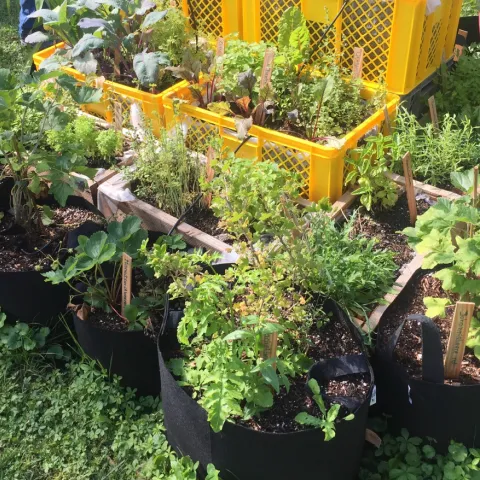
A combination of grow bags and other containers can be used to create a portable edible garden
UC Marin Master Gardeners: Article

June 2024: Growing Edibles in Containers

May 24, 2024
Maximizing the use of space to grow edibles is always a consideration in the Edible Demonstration Garden. Planting veggies in containers has proven to be an excellent way to expand the gardens growing capacity...
View Article

May 2024: Flowers and Edibles Make Good Neighbors

Primary Image
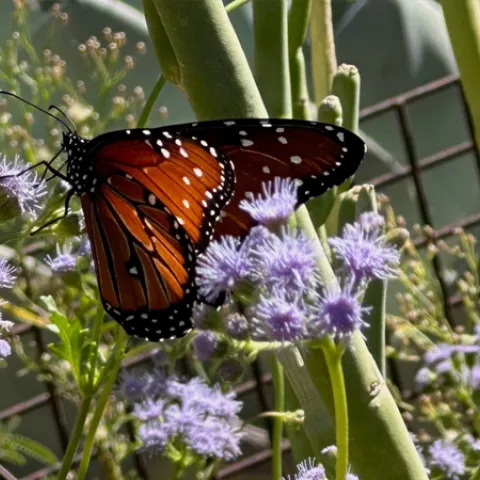
Nectar-producing flowers bring butterflies to help with pollination
Body

May Edible 1
Spring is here and plants in the Edible Demo Garden are beginning to bloom. Not all the blooming plants in the garden are edible crops – some are there for their flowers. The flowers add to the beauty of the garden, but they don’t just look pretty – they have important jobs to do. They attract pollinators, repel pests, provide a habitat for beneficial insects, and contribute to the biodiversity of the garden. It turns out that many flowering plants can be good companions for the edibles.


A variety of flowers are grown in the Edible Demo Garden. Some are perennials such as yarrow and lavender. Others are annuals that are grown from seed in the greenhouse and planted each year. These include zinnias, marigolds, and calendula. Then there are the flowering plants that self-seed and return on their own like the California poppies and the sunflowers. Sunflowers have been so successful in the Edible Demo Garden, that they sometimes show up where they are not wanted.


Favorite flowers for attracting pollinators

May Edible 2
It’s easy to tell which flowers are popular with bees – just head for the buzzing sound. The California lilac (Ceanothus), planted in the garden several years ago, blooms early, ensuring that there will be bees around when the spring vegetable crops start blooming. Although it’s also a culinary herb, rosemary (Rosmarinus officinalis), is another bee magnet. It turns out that many of the culinary herbs and herbs for tea produce flowers that attract pollinators. Mexican tarragon (Tagetes lucida), Anise hyssop (Agastache foeniculum), Coneflower (Echinacea)and Chamomile (Matricaria recutita) all do double duty in the Edible Demo Garden. Nectar producing flowering plants, like the Cleveland sage (Salvia clevelandii) and California Fuschia (Epilobium canum) also attract hummingbirds and butterflies to help in the pollinating work.


Flowering plants that discourage pests

There is increasing scientific-based evidence that certain plants are effective in managing pests in an edible garden. They can confuse pests, luring them away from their favorite target and disrupting their feeding and egg-laying behaviors. Studies have suggested that plants with strong odors can discourage pests by masking the scent of the desired host plant. Marigolds (Tagetes) have long been a pest-repelling favorite of gardeners, but the supporting science is scant. However, there is research showing their effectiveness against parasitic nematodes and some flies affecting vegetable crops. In addition to their ability to attract pollinators, Nasturtiums (Tropaeolum majus), have been found to reduce squash bug damage when grown with zucchini. Their edible flowers make them especially welcome in the garden.


The importance of diversity in the garden

Image removed.Mixing in some flowering plants with the edibles encourages beneficial insects that can keep pests in check. Members of the Asteraceae family, which includes yarrow, sunflowers, zinnias, calendula, and asters, support beneficial insects that dine on aphids. Flowering herbs provide nectar for parasitic wasps which help control caterpillar pests. Low -growing flowering plants such as thyme and oregano provide a sheltered habitat for ground-dwelling beneficials.


The right flowers in an edible garden are not just ornamental, they balance the garden. They help in creating a habitat that supports plant growth and production and reduces the need for pesticides and other pest-management strategies.


Click here for more information about plants that attract pollinators.

UC Marin Master Gardeners
Primary Image
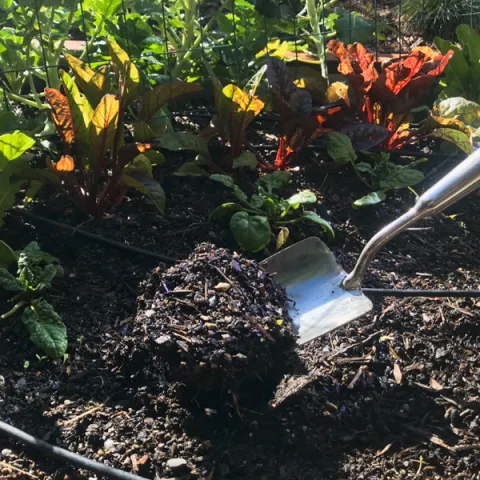
Garden soil can look healthy and still be lacking in nutrients essential for optimum plant growth
UC Marin Master Gardeners: Article

April 2024: The Importance of Soil Testing

March 23, 2024
The soil in the Edible Demo Garden gets a lot of attention. Compost and organic amendments are added regularly. Moisture levels are monitored, and rainwater is supplemented with drip irrigation and hand watering.
View Article
Primary Image
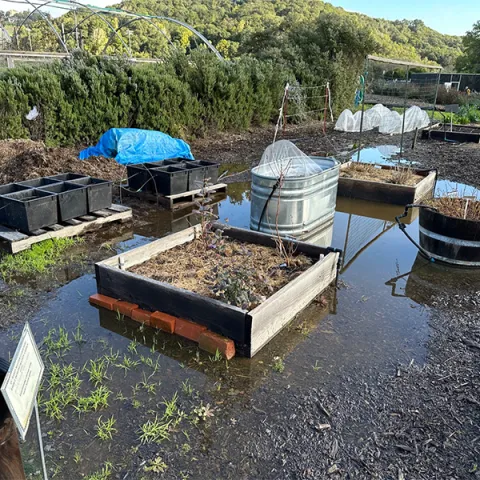
The flooded garden needed time to dry out after the February rains.
UC Marin Master Gardeners: Article

March 2024: Making Soil for Seeds

February 26, 2024
The rain in February flooded the areas around the garden beds in the Edible Demo Garden. Volunteers were busy digging trenches to redirect the water away from the planted areas and salvaging any crops that were still productive.
View Article

February 2024: Rotating Crops

Primary Image
yeararoundgardening
Body

While the rains limited some of the garden work during January, it was the perfect time to assess the condition of the garden beds and plan for the spring and summer crops. Some of the beds are dedicated to perennials such as blueberries, raspberries, and rhubarb. Others have typically been used to grow herbs and spices like mint, tarragon, and horseradish. However, most of the beds are reserved for annuals and that’s where the planning comes in.


In addition to deciding what to plant and securing the seeds, it’s important to determine the best location for the plants. The main considerations are light, water, and soil. All the existing beds receive plenty of sunshine and have access to irrigation. Soil condition then becomes key in deciding where crops should be planted. A goal in using soil more effectively is to rotate
crops and avoid planting the same crop in the same place season after season.


Why is rotating crops important?
Rotating crops can help retain soil fertility and prevent the buildup of soil borne diseases and pests. Plants differ in micronutrient needs and susceptibility to soil pathogens. The problems that affect plants from one family, may not be an issue for plants from another family. Moving a particular crop, such as cucumbers, to a different planting location each season, can reduce the possibility of infection by diseases that target members of the cucurbit family.


Categories for crop rotation
There are different ways to divide crops into groups for crop rotation. One way is to split crops into categories based on the part harvested. Leafy crops, for example, would be planted together and moved to a new location each season followed by fruit crops, root crops, and legumes. Another method is to group crops as heavy or light feeders according to their nutrient needs. Moving heavy feeders to beds previously occupied by light feeders can make better use of soil nutrients. The most common grouping for crop rotation is according to botanical plant family. Tomatoes, eggplant, peppers, and potatoes are members of the Solanaceae family. Solanaceous crops share the same pests and are susceptible to some serious soil borne viruses.
Preferably tomatoes should not be planted in the same place more than once every four years allowing time for soil diseases to die out. Other plant families to be planted and moved together are the cucurbits (squash and cucumber), alliums (onions, leeks, and garlic), brassicas (broccoli, cauliflower, and cabbage) and legumes (peas and beans).


Difficulties in rotating crops
The ideal rotation plan would involve a three- or four-year cycle. This can work well in a garden large enough to be divided into quadrants. When space is restricted, the cycle may need to be shortened and the number of plant groups reduced. At the very least, home gardeners with limited space should avoid planting the same crop or crops from the same family year after year in the same part of the garden.

In the Edible Demo Garden, straw bales and grow bags are used to increase the available planting space. Because the straw bales are replaced each year and new soil is added to the grow bags, there is no need to rotate the crops planted in these spaces. The straw bales work well for the cucurbit family plants and this frees up garden space for plants from other families. The plans this year are to use the grow bags for tomatoes.
Want to visit the Edible Demo Garden? You’ll find volunteers on site most Tuesday and Friday mornings from 9-11 am. The garden is located within the Indian Valley Organic Farm and Garden on the College of Marin campus in Novato.
Click on this link for more tips about crop rotation.

yeararoundgardening

Year around gardening in the Edible Demo Garden includes planning for crop rotation

leafygreens

Leafy greens can grow together and rotate as a group

strawbales

Straw bales serve as new beds for squash plants in the Edible Demo Garden

UC Marin Master Gardeners
Primary Image
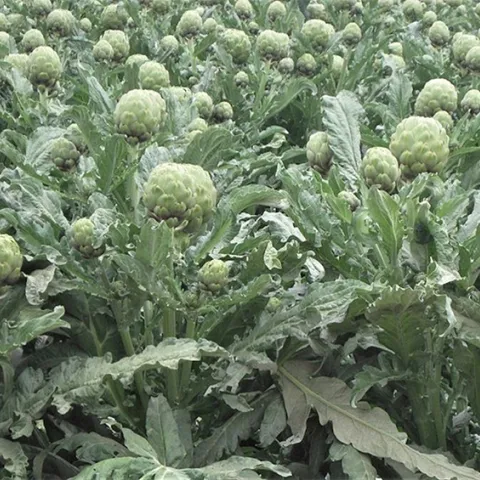
Almost all artichokes sold commercially in the US are grown in California Credit: rawpixel
UC Marin Master Gardeners: Article

January 2024: Planting Time for Artichokes

December 26, 2023
While artichokes may not be on every gardeners cool season vegetable list, they are fun to grow, and December is the right time to plant them for an early spring crop.
View Article
Primary Image
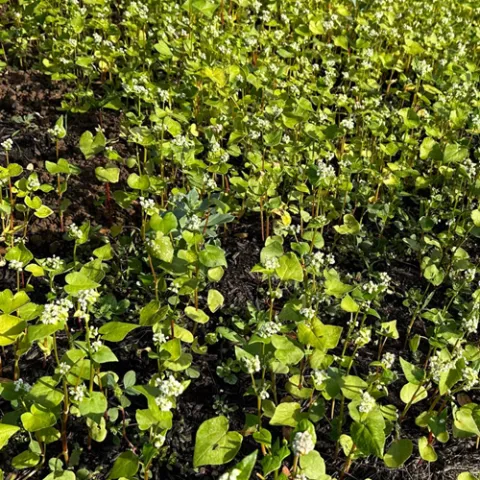
Caption: Buckwheat is a non-legume cover crop that helps to improve the soil in preparation for spring planting.
UC Marin Master Gardeners: Article

December 2023: Caring for the Soil

November 28, 2023
After the fall harvest was over, it was time to clean up and replenish the soil in the Edible Demo Garden. Healthy soil is fundamental to the success of the next seasons crops.
View Article